Picasso: The Royan sketchbooks brings together eight pencil and ink sketchbooks, alongside gouaches, photographs, paintings, drawings and poems by the artist, which together reveal how Picasso continued to give free rein to his creative drive in times of war, specifically in the years 1939 and 1940.
Following the outbreak World War II Picasso moved to Royan, a seaside town on the French Atlantic coast where he lived for a year. Curated by Marilyn McCully and Michael Raeburn, the exhibition is complemented by a learning/discovery space that contextualises this phase in the artist’s life and career.
The exhibition, which can be seen from tomorrow, 31 January, to 30 April 2025, is organised by the Museo Picasso Málaga in collaboration with the Fundación Almine y Bernard Ruiz-Picasso (FABA), together with the Ministry of Culture and Sport of the Regional Government of Andalusia.
Between September 1939 and August 1940, Picasso produced eight sketchbooks of pencil and ink drawings while he was living in the French town of Royan, to where he moved with Dora Maar and accompanied by Jaime Sabartés following the outbreak of World War II. Marie-Thérèse Walter and Maya, Walter’s daughter with Picasso, had already been living in the town for a couple of months. Far from the French capital, this seaside town with its 19th-century architecture seemed a safe place at the time. Disturbed and restless due to the war, during those eight months Picasso made the 500-kilometre journey between Royan and Paris on several occasions in order to ensure that, as a foreigner, his documents were in order and also to check on the safety and storage of his works and even to participate in preparations for an exhibition of his drawings.
Marilyn McCully, the exhibition’s curator, considers that the nature of Picasso's artistic activity changed, largely as a result of the limited availability of materials: “Thus, in order to develop his ideas in sequence, a characteristic of his working method, he devoted much of his creative energies to drawing.” Possibly due to the difficulty of finding art materials in Royan, Picasso purchased several sketchbooks and notebooks of ordinary paper, both lined and graph paper, at the local Hachette bookstore. Their small size meant that he was able to take them with him to his hotel room, to the villa and even to outdoor café tables. This was habitual with Picasso who, like many artists, used sketchbooks throughout his career to jot down visual ideas, either references to previous works or new ideas for future compositions.
The themes of the Royan sketchbooks range from still life, a genre that Picasso employed during the war with particular drama, to formal studies of female figures that evoke Dora Marr, his companion at the time and a source of artistic inspiration during their stay in the town. The almost complete absence of portraits of Marie-Thérèse Walter and her daughter Maya, whom he saw daily, is striking. Among the sketchbooks exhibited at the Museo Picasso Málaga is one that also includes poetic writings by Picasso, a form of expression with which he experimented for the first time in 1935.
Another factor that could have influenced this preference for drawing is the artist’s work space. Having initially installed himself in a dining room of the Villa Gerbier de Jonc where Marie-Thérèse and Maya were also living, in early 1940 Picasso rented a third floor with sea views in the building Les Voiliers. Although there is no certainty regarding exactly how many canvases the artist painted during his time in Royan, four works included in the exhibition reflect his pictorial activity and creative drive during that period: Bust of a Woman with her Arms crossed behind her Head (1939) from the collection of the Museo Picasso Málaga; Three Lambs’ Heads (1939) loaned by the Museo Nacional Centro Nacional de Arte Reina Sofía, Madrid; Woman dressing her Hair (1940) from the Museum of Modern Art (MoMA), New York; and Café in Royan (August 1940) loaned by the Musée Picasso in Paris. For the exhibition’s curator Michael Raeburn: “Where previously he had drawn on the simplification of tribal art to escape from an outworn tradition of objective imitation, he now tried to harness the inner power of these same models to penetrate the subjective identity of heads and figures.”
On 14 June 1940 Paris was occupied by the German forces and on 24 August that year Picasso returned permanently to the city, recovering a few months later the work he had left in Royan. In 1945 the building in Royan where he had installed his second studio was destroyed in a bombing raid.
Picasso: The Royan sketchbooks, organised in collaboration with the Fundación Almine y Bernard Ruiz-Picasso and with an installation design by Cécile Degos, contextualises these sketchbooks by presenting them alongside other works created by the artist in Royan, in addition to documentation relating to that period. Drawings, gouaches, paintings, photographs and poems by Picasso together reveal a prolific stage in his life and artistic career.
A special learning/discovery space has been created for Picasso: The Royan sketchbooks in which the content on display is contextualised through texts accompanied by reproductions of documents and photographs, shown next to original material of the period.
This space is divided into three sections: firstly, a chronology of the time that Picasso spent in Royan. It includes the most significant moments in the artist's life during this period as well as relevant historical events. Secondly, information on the city of Royan at the time, illustrated by a plan of its urban layout: streets, buildings, green spaces and the importance of its location on the Atlantic coastline. Finally, this space includes a selection of brief biographical accounts of individuals close to Picasso at this period.
The room’s learning function is completed with an area for consulting publications relating to the content of the exhibition.
The exhibition is accompanied by a catalogue, generously illustrated with the works on display, in addition to texts by the two curators, documents, postcards and photographs of the time. This 150-page publication will be on sale in Spanish and English in the Museum’s bookshop and from its online shop.
PICASSO: LOS CUADERNOS DE ROYAN
31 enero – 30 abril 2025
01 Pablo Picasso (1881-1973)
Cuaderno 202
Royan, 3-9 noviembre 1939
Lápiz, tinta negra y aguada
28 hojas de papel vitela; 26 encuadernadas y 2 sueltas
Cubierta entelada
11 × 17 cm (cubierta)
Museo Picasso Málaga. Donación de Christine Ruiz-Picasso. MPM1.35-1 - MPM1.35-28
Town plan of Royan (from Souvenirs de Royan, vol. 1) with marked locations of: 1. Hôtel du Tigre; 2. Villa Gerbier de Jonc; 3. Les Voiliers, and 4. Café des Bains
The years 1280–1290 witnessed a fundamental, even revolutionary development in the history of Western painting: for the first time, a painter sought to depict the world, objects and figures around him as they actually existed. This visionary artist, of whom we know almost nothing and by whom only some fifteen works have come down to us, was Cimabue (Florence, about 1240–Pisa [?], 1301/1302).
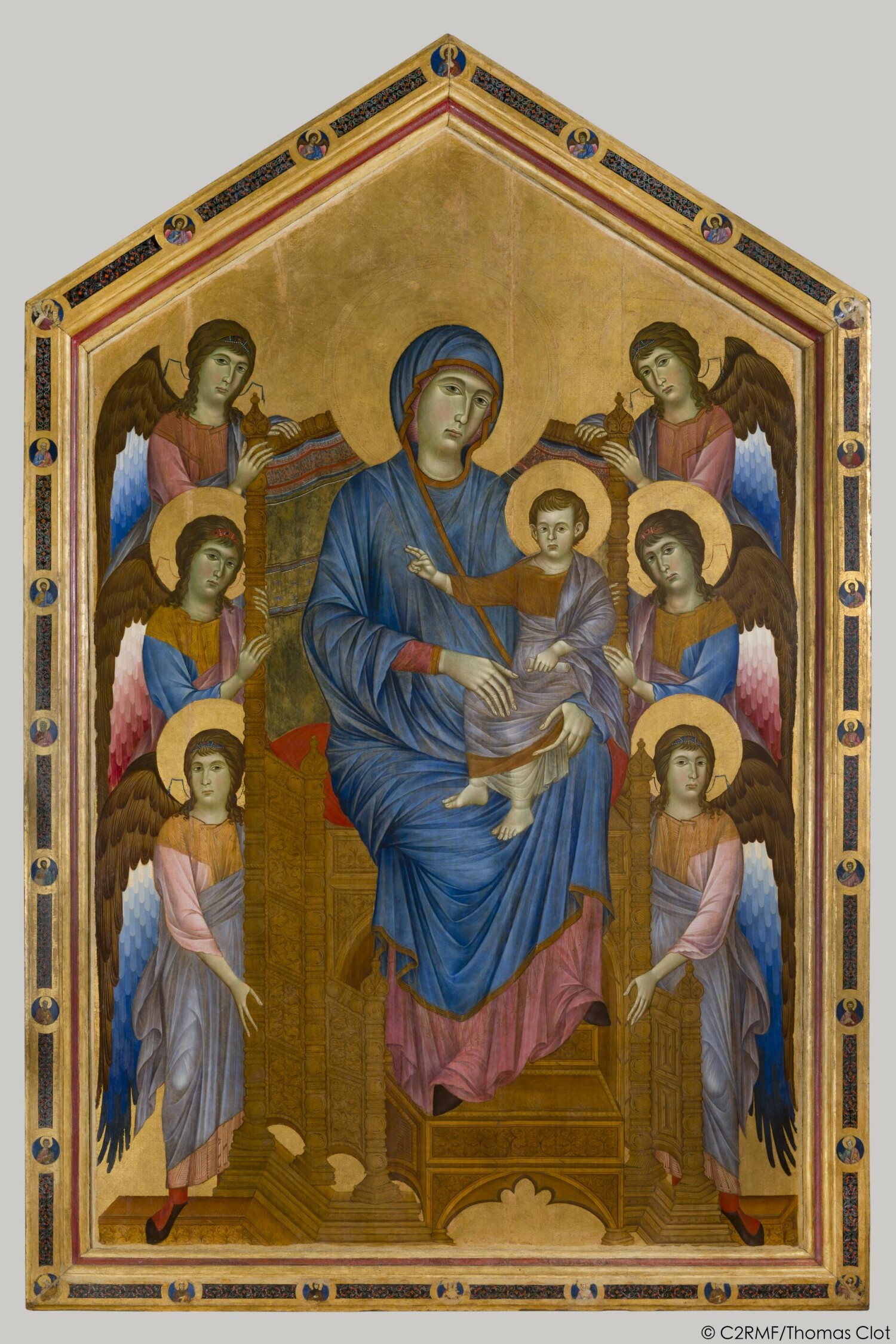
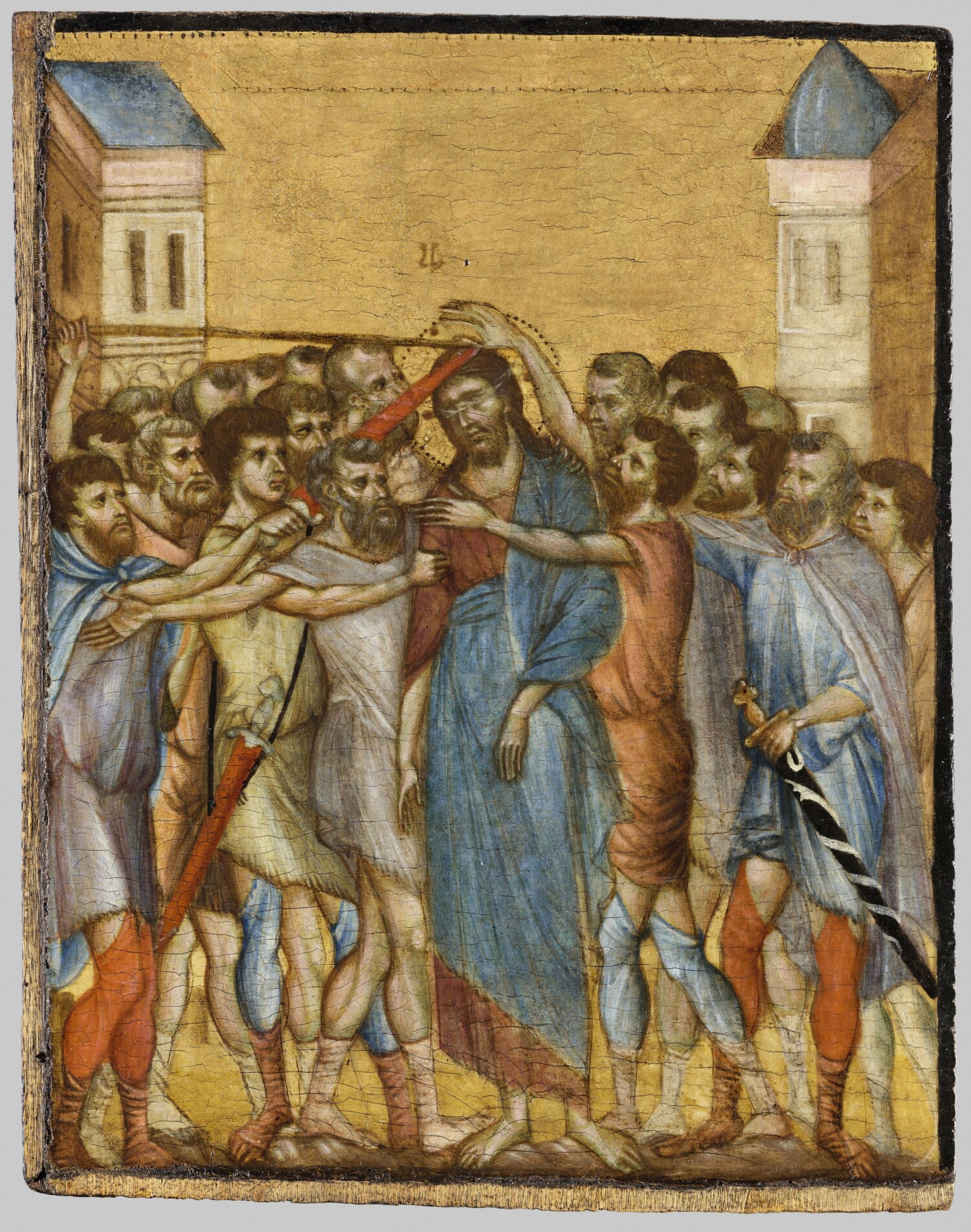
This, the Musée du Louvre’s first exhibition dedicated to Cimabue, is the product of two events of great importance for the museum: the conservation work of his Maestà, often described as ‘the founding act of Western painting’, and the acquisition of a heretofore-unseen Cimabue panel, rediscovered in France in 2019 and listed as a French National Treasure: Christ Mocked. These two paintings, whose conservation work was completed in 2024, provide the starting point for this exhibition, which, by bringing together some forty works, aims to illuminate the groundbreaking manner and astonishing invention by which Cimabue renewed the art of painting. It thus tells the fascinating story of a beginning.
Cimabue opened the way for naturalism in Western painting. With him, the conventions of representation inherited from Eastern art, particularly Byzantine icons, so highly valued until this period, gave way to an inventive art of painting seeking to evoke a three-dimensional space; bodies in volume, shaped by subtle shading; articulated limbs, natural postures and human emotions. He also developed a narrative verve that until now was thought to have originated with his flamboyant successors, Giotto and Duccio.
As the exhibition prologue states, we have very little information about Cenni di Pepo, known as Cimabue: we do not even know the meaning of his sobriquet. Only a few archival documents allow us to identify the artist and a few turning points in his career. It was Dante, in a passage of the Divine Comedy, who originated the artist’s myth in the early 14th century: by establishing this painter’s importance, the poet kindled the fascination that the name Cimabue has exerted from the age of the Medici to the present.
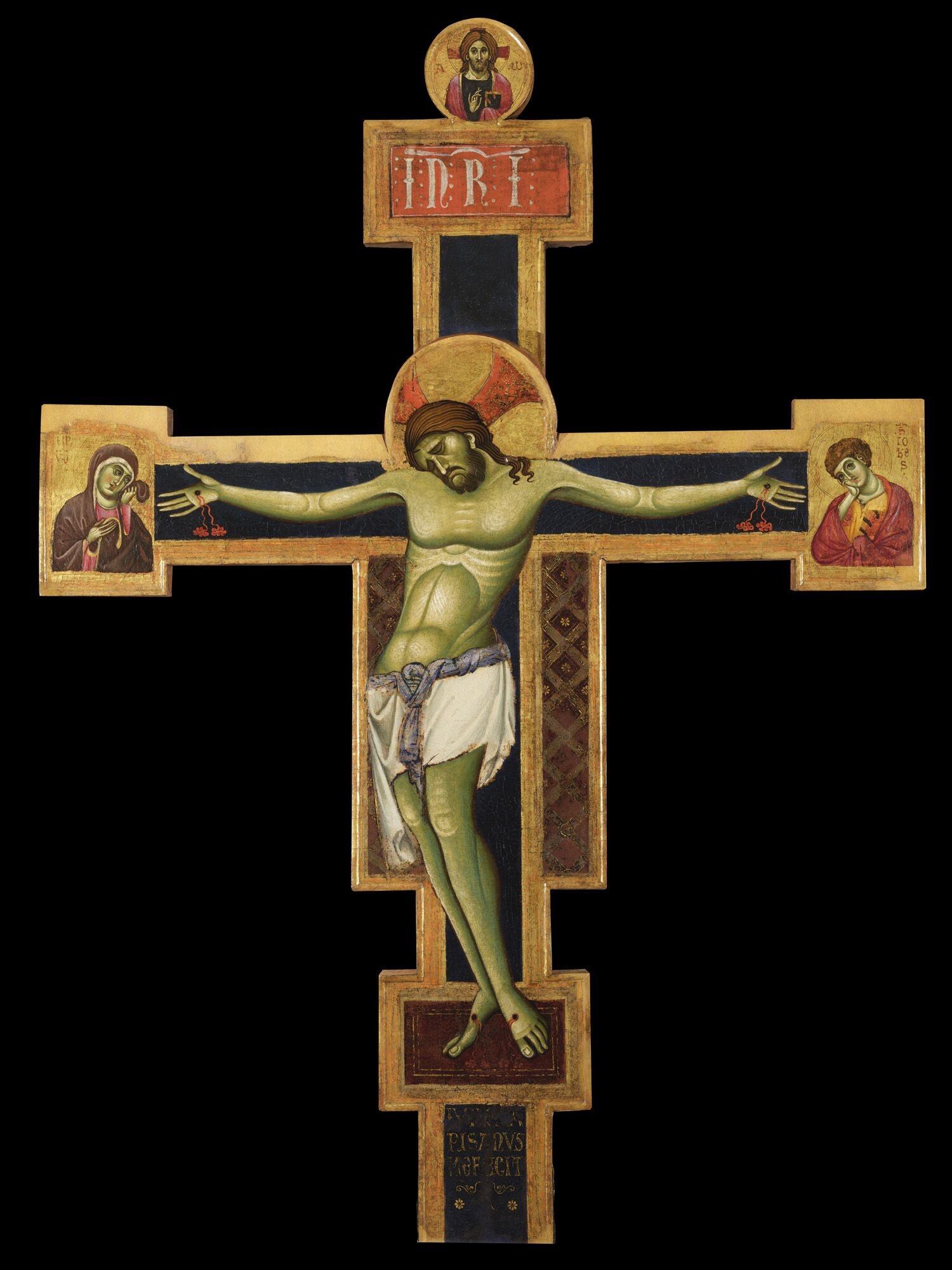
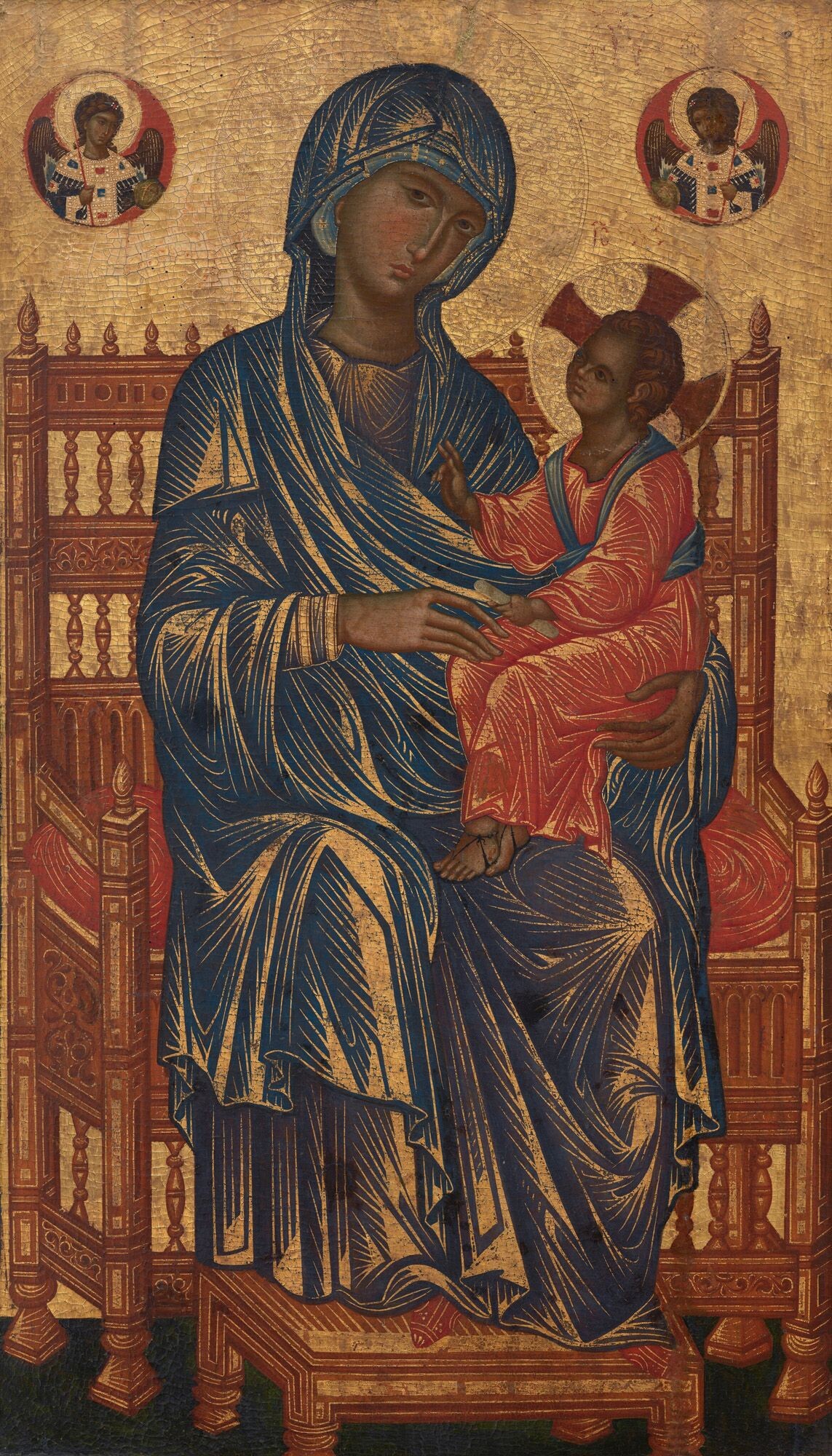
The introductory section, dedicated to the context of painting in Florence, Pisa and Assisi in the mid-13th century, sets the artistic scene into which Cimabue emerged. At that time, a work of art was appreciated for its conformity with the great prototypes of Eastern icons, thought to derive faithfully from acheiropoieta, icons ‘made without hand’. In these images, thought to be miraculous, figures were represented as belonging to the sacred world, not meant to resemble human beings. This explains their conventional anatomical deformations, as seen in the Cross of San Ranieri by Giunta Pisano, the dominant artistic figure of this era (Pisa, Museo di San Mateo), or in the Kahn Madonna (Washington D.C., National Gallery of Art), one of the most fascinating icons of the period.
Cimabue aimed to break with this mode of representation. The visit then concentrates on the Louvre’s Maestà, the heart of the exhibition: the innovations manifest in this painting have led certain art historians to consider it ‘the founding act of Western painting’. This monumental work (4.27 x 2.8 m) illustrates Cimabue’s aspirations: to humanise the holy figures and create the illusion of reality, particularly in his rendering of space, with the throne seen at an angle. Conservation work has made visible not only the variety and subtlety of its colours (as in the extraordinarily glowing brightness of his blues, all painted in lapis lazuli), but many details that had been masked by overpainting, showing the fascination that the East, both Byzantine and Islamic, evoked in Cimabue and his patrons: for instance, the red border covered with pseudo-Arabic inscriptions and the Eastern textile draping the back of the throne.
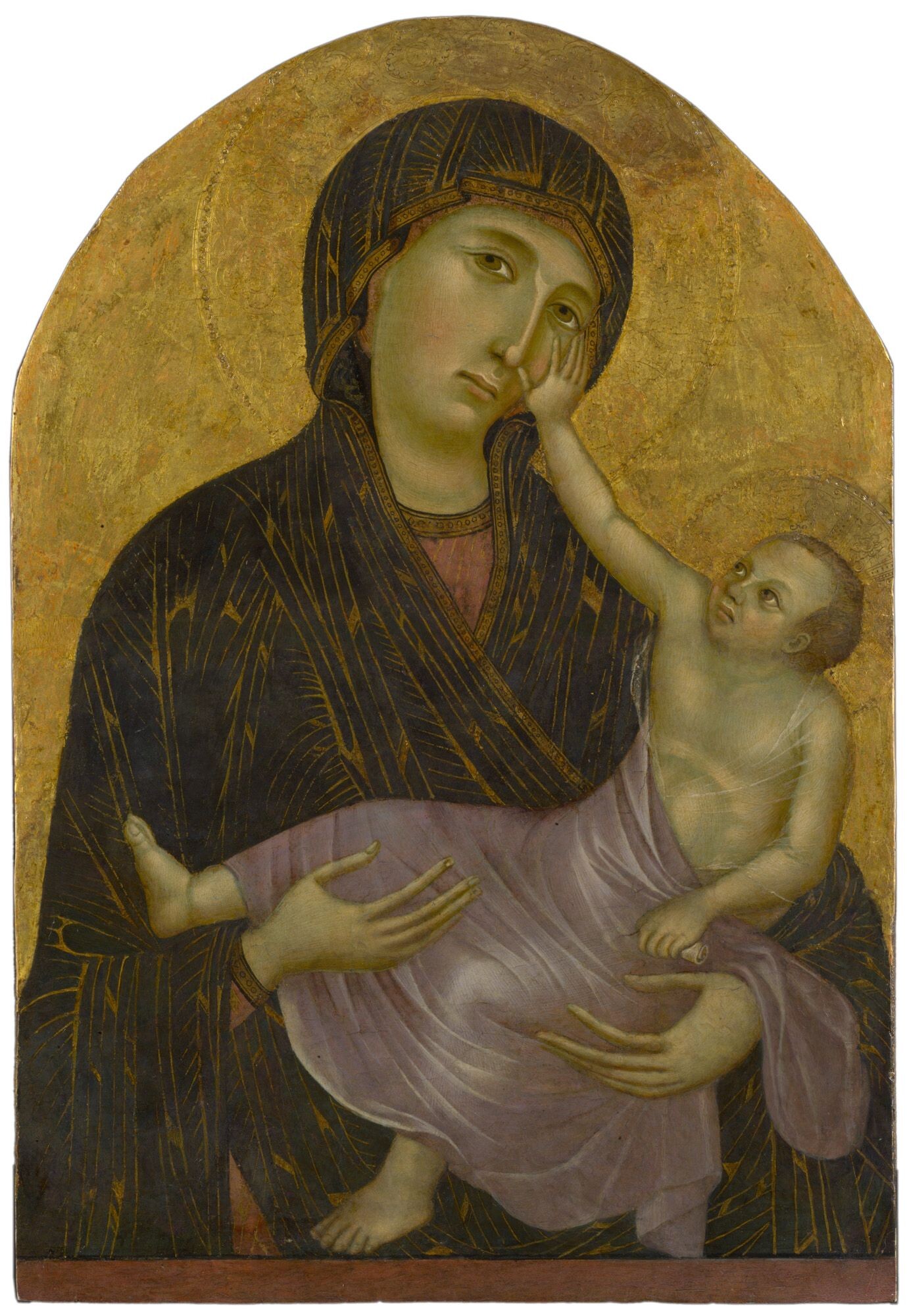
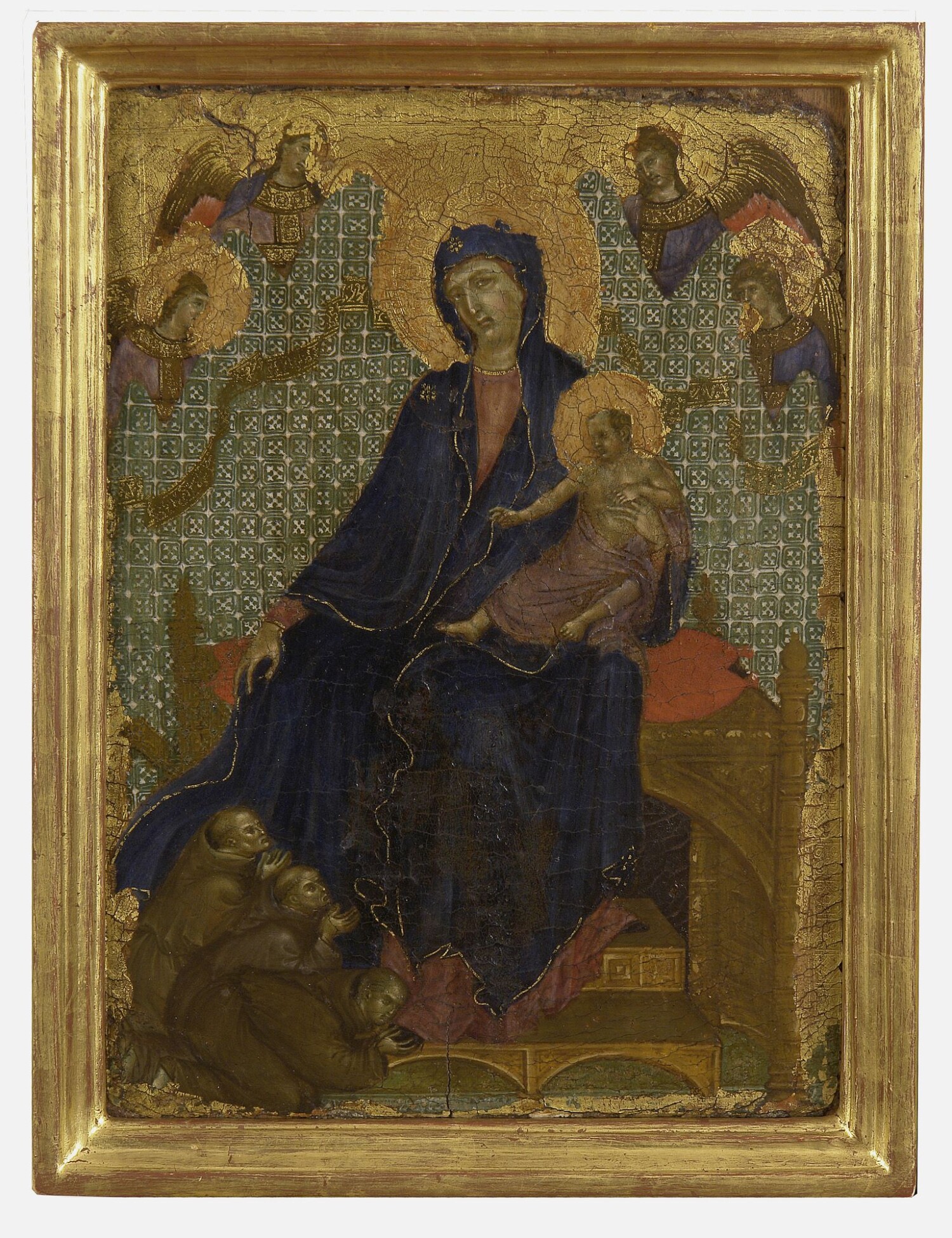
The production of a monumental painting like the Maestà raises the question of Cimabue’s studio. As with so much else, we know nothing about it. However, Cimabue is reputed to have been Giotto’s teacher, and art historians think that the great Sienese painter Duccio di Buoninsegna must have been influenced by the creations of the great Florentine painter. It is true that Cimabue’s manner influenced many; this exhibition juxtaposes the works of several of these artists, all of whom sought to awaken the emotional involvement of the faithful. The stylistic proximity of Duccio’s Crevole Madonna (Siena, Museo dell’Opera del Duomo) and Cimabue’s Maestà is eloquent, seen in the delicate modelling of the Virgin’s face and the plays of transparency.
With Cimabue the conviction was affirmed that each artist must establish his own manner, that traditional subjects must constantly be refreshed. Novelty became a central element in artistic appreciation. There resulted an extraordinary atmosphere of invention and emulation among painters.
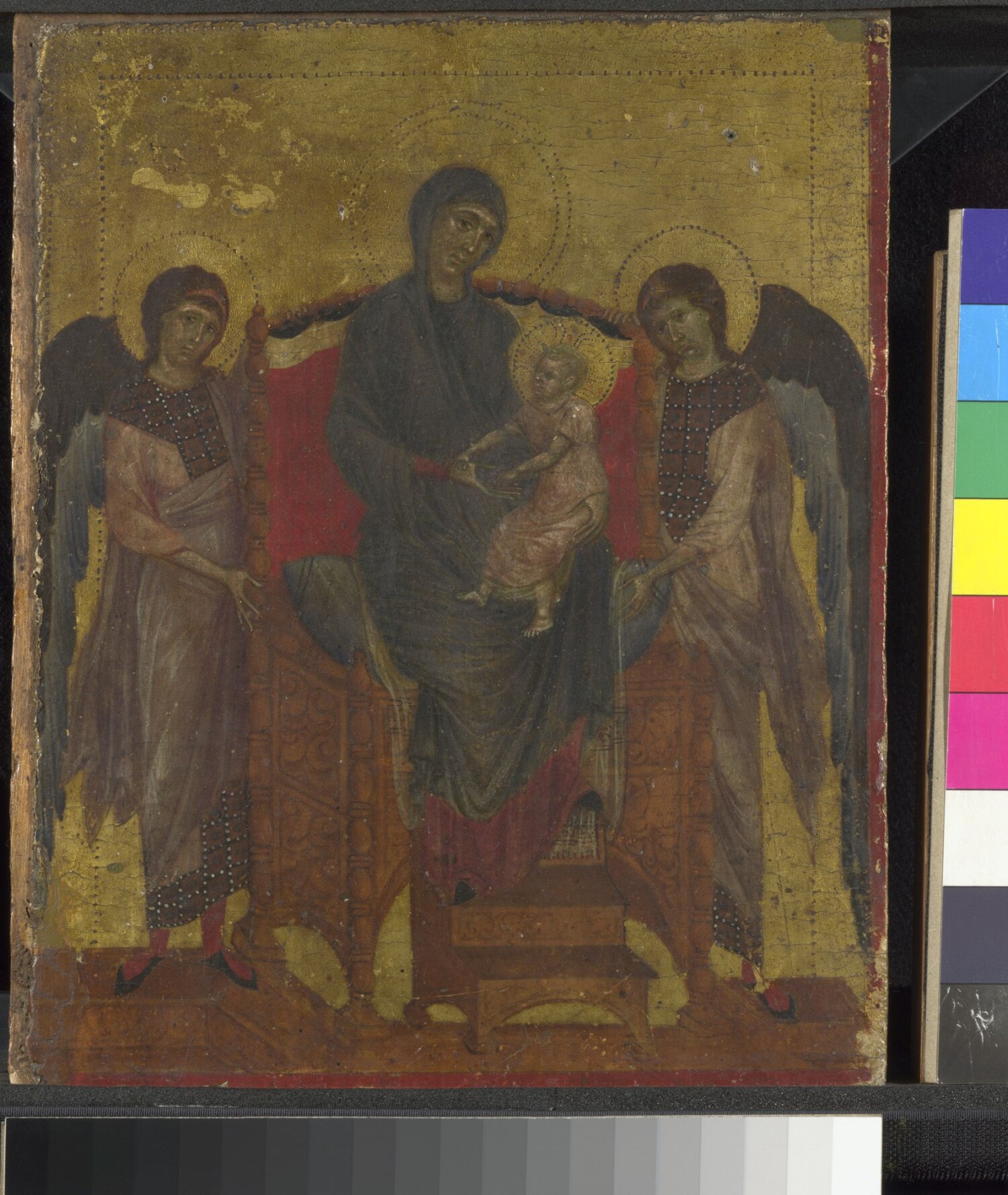
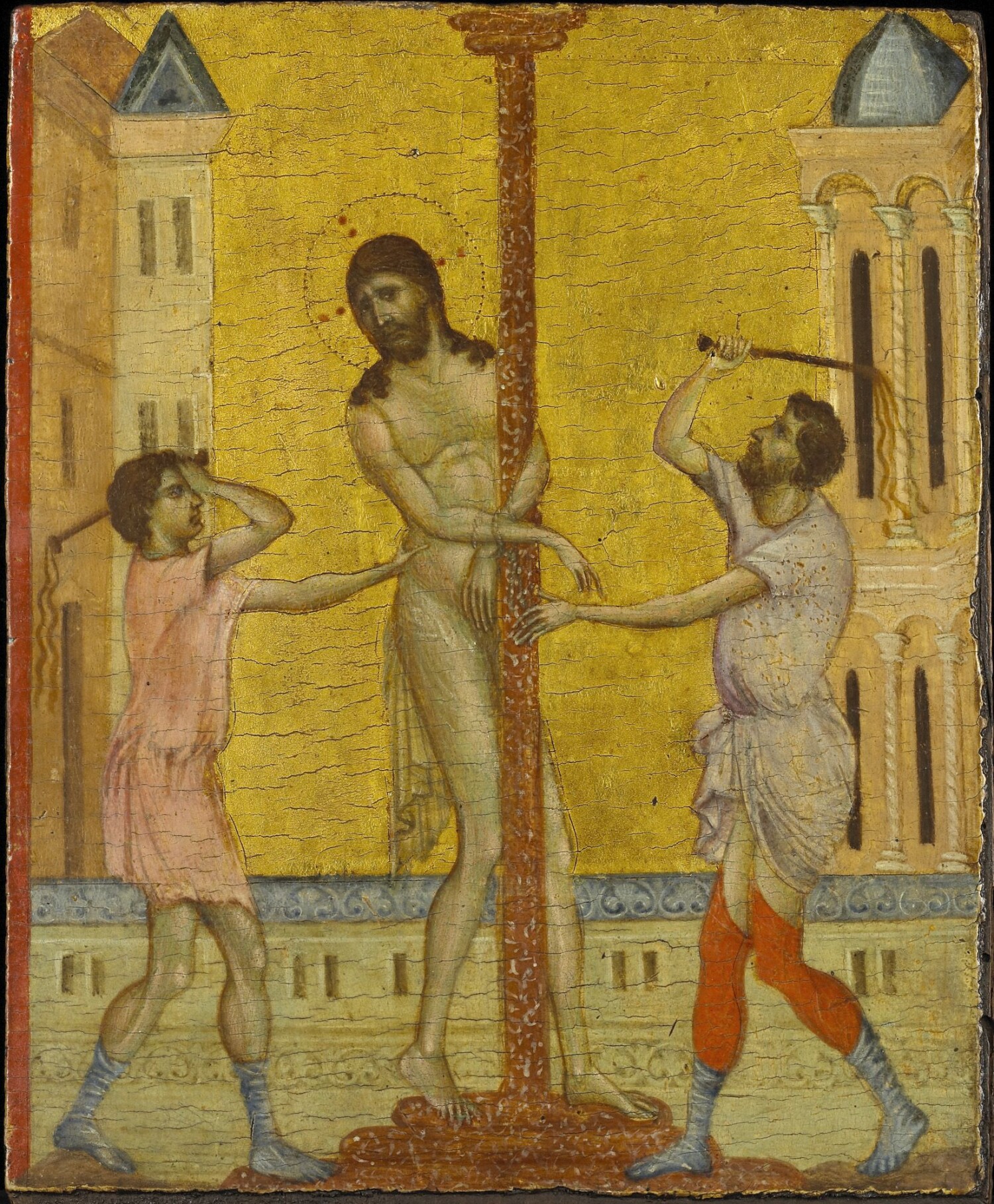
The visit continues with a section constructed around Cimabue’s eight-panel diptych, of which the Louvre has brought together for the first time the only three panels known today. The narrative vitality and liberty deployed by Cimabue in this work of shimmering colours, particularly in Christ Mocked, make it an important and heretofore unsuspected precedent to Duccio’s Maestà, a masterpiece of 14th-century Sienese painting. In this little panel, Cimabue demonstrates prodigiousinventiveness, rooting his composition in the daily life of his era and daring to clothe his figures in the garments of his time. In this way he echoes the perspective of the Franciscans, promotors of a more interiorised and immediate spirituality.
The exhibition concludes with the presentation of Giotto’s great Saint Francis Receiving the Stigmata, intended for the same architectural placement as the Louvre’s Maestà: the tramezzo, or rood screen (the partition separating the nave from the choir) of the church of San Francesco in Pisa, painted a few years later by Cimabue’s talented young disciple. At the dawn of the 14th century, Duccio and Giotto, both profoundly influenced by the art of the great Cimabue, who died in 1302, would embody the new possibilities of the art of painting.
Exhibition Curator Thomas Bohl, Curator in the Department of Paintings, Musée du Louvre
Catalogue Edited by Thomas Bohl, co-published by Musée du Louvre Éditions and Silvana Editoriale, 256 pages, 170 illustrations, 42 €.
Publication Revue Technè, no.58: ‘Cimabue et la Toscane à la fin du XIIIe siècle : techniques, matériaux et restaurations’, edited by Thomas Bohl, Marco Ciatti (†) and Elisabeth Ravaud. Published by the Centre for Research and Restoration of the Museums of France (C2RMF)
5. Giunta Pisano, Croix de San Ranierino. Pise, museo di San Matteo. su concessione del Ministero della Cultura – Musei nazionali di Pisa – Direzione regionale Musei Nazionali Toscana – Firenze-jpg
7. Peintre byzantin,Madone Kahn. Courtesy National Gallery of Art, Washington-jpg
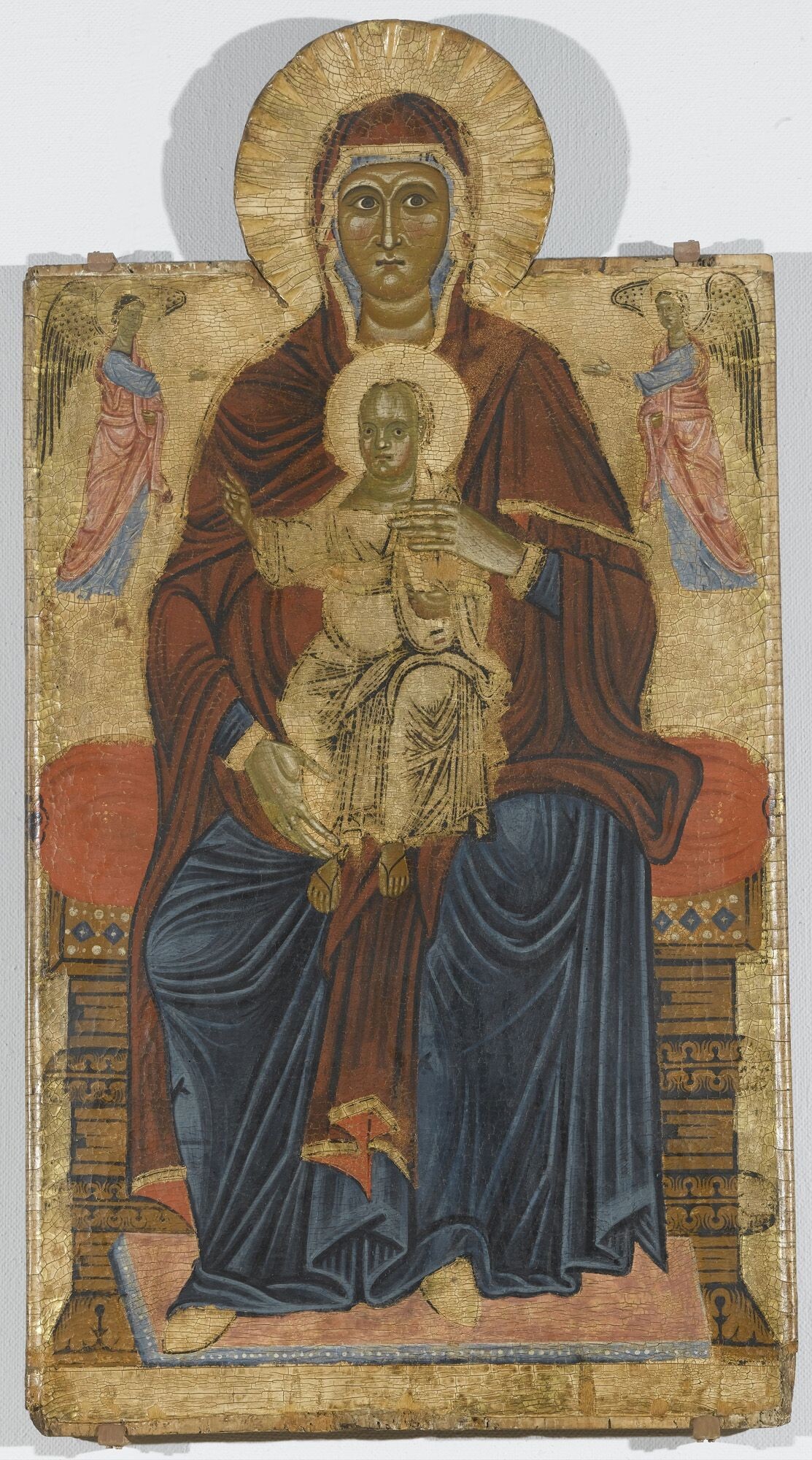
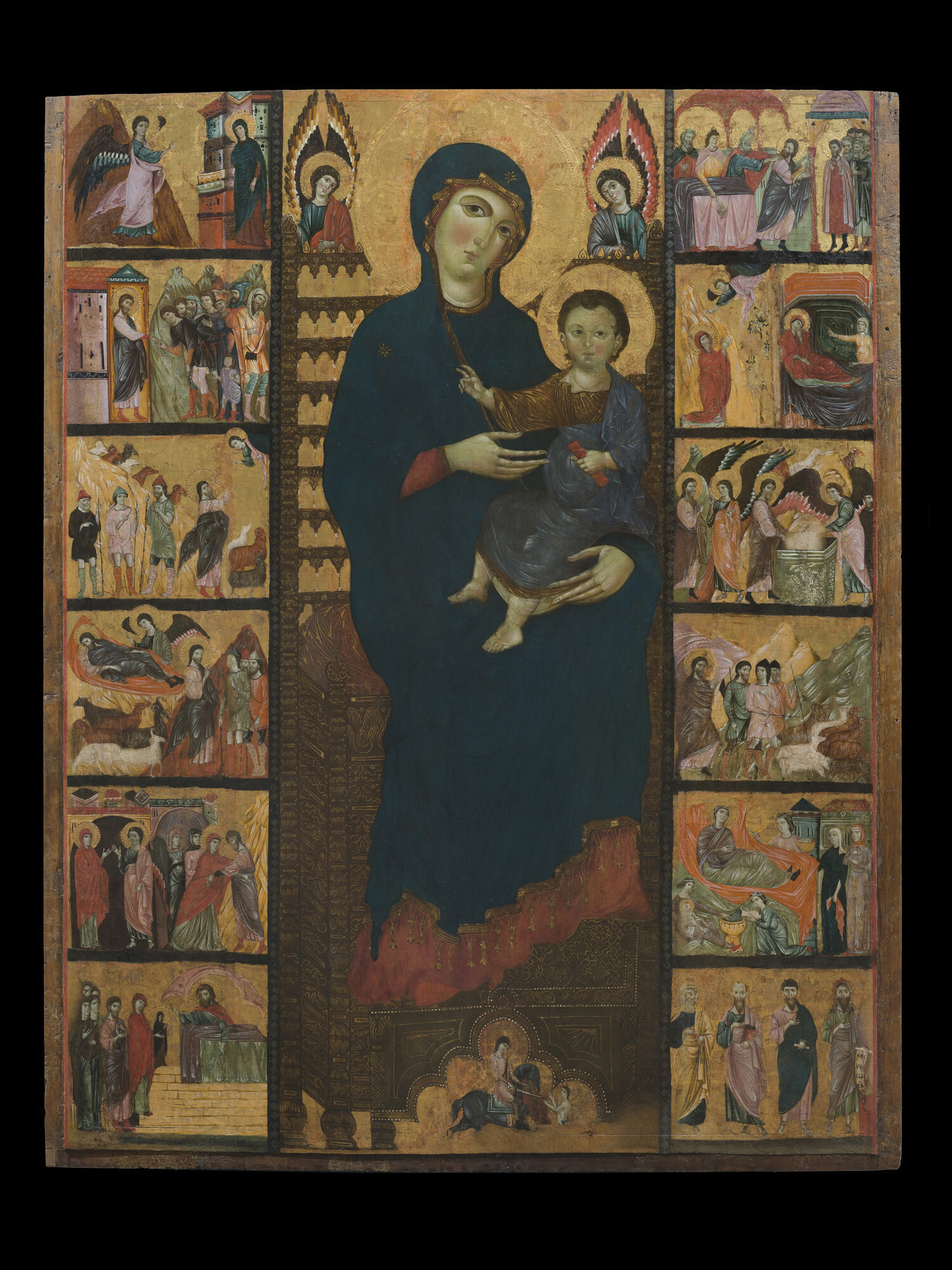
8_Maître de san Martino, Maestà avec scènes de la Vie d'Anne et Joachim. Su concessione del Ministero della Cultura, Musei nazionali di Pisa, Direzione regionale Musei-jpg
10. Atelier de Duccio, Madone de Castelfiorentino, Museo di Santa Verdiana. Ministero della Cultura, Opificio delle Pietre Dure, Archivio fotografico del restauro-jpg
11. Duccio, Madone des Franciscains. Su concessione del Ministero della Cultura, Musei Nazionali di Siena-jpg