The Whitney Museum of American Art’s current exhibition
Roy Lichtenstein: 1997 examines the final year of the artist’s life and work.
Already an established painter and Pop artist, Roy Lichtenstein (1923–1997) continued to develop his studio practice at age 73, pursuing ambitious projects, including two mural commissions, several large-scale sculptures, and a new series of prints.
The exhibition highlights a period of sustained innovation for Lichtenstein as he expanded his visual vocabulary while continuing to engage with many of the themes and image references that shaped his career. Bringing together studies, prints, models, and other ephemera, many from the Whitney’s collection, Roy Lichtenstein: 1997 offers a focused look at his experimentation and ongoing interest in new technologies and their effects on image making.
On view on the Museum’s 3rd floor through June 1, 2027, this exhibition is presented in conjunction with Roy Lichtenstein: Like New, a major exhibition opening at the Whitney on October 11.
In 1997, Lichtenstein remained as innovative and productive as ever, working on a variety of adventurous projects decades after he helped introduce broader audiences to Pop art through his celebrated paintings inspired by comics and American consumer culture. Throughout his career, Lichtenstein’s palette consisted mainly of primary colors and his signature bold black outlines. In his later years, however, he began to incorporate vibrant highlights of mint green and turquoise, coral and cyan, and moved away from using heavy outlines that characterized his earlier work, resulting in images that responded to the aesthetics of the emerging digital age. Even as he pursued new directions, Lichtenstein continued to reuse images and motifs from his own work, such as pyramids and brushstrokes, as well as referencing iconic works by artists like Leonardo da Vinci and Henri Matisse, as he had done throughout his career.
“Though still recognizably his own, these works attest to Lichtenstein’s remarkable openness even five decades into his career—open not only to developments in art and technology, but to new techniques and approaches in his own working process,” said co-organizer David Crane, Curatorial Research Associate at the Whitney Museum.
“Because many of the works on view remain unrealized or unfinished, they provide a rare glimpse into the artist's hand at work.” “As a way to build off conversations prompted by the 5th floor’s Roy Lichtenstein: Like New exhibition, David and I were drawn to several of the permanent collection’s unfinished prototypes and studies from 1997,” said co-organizer Nakai Falcón, Curatorial Assistant at the Whitney. “Engaging with the late-90s dawn of the internet, Lichtenstein’s final experimental gestures serve as a visionary bridge between the constraints of physical reality and a transcendent future.”
In September 1997, Lichtenstein died unexpectedly after falling ill the month prior, leaving a number of works unfinished. Several works were fabricated or completed posthumously, with others surviving only as sketches and maquettes.
Among the works on view is Chapel of the Eucharist Mural (Study), 1997, a study related to a mural for the Padre Pio Pilgrimage Church in San Giovanni Rotondo, Italy. Renzo Piano, the architect responsible for the Whitney Museum’s current building in downtown Manhattan, was commissioned to design the church and invited Lichtenstein to contribute a mural to the site.
Other projects include studies for a proposal from the Bellagio Hotel in Las Vegas, Nevada, to create a pair of murals for the building’s lobby. With Bellagio Hotel Mural: Still Life with Reclining Nude (Study), 1997, Lichtenstein explores the use of color outlines and experiments with the flattening of perspectives in interior spaces. Seen together, the featured works reveal the developments in Lichtenstein’s practice and approaches at the end of his career, while illuminating the breadth of work underway during his final months.
Roy Lichtenstein: 1997 is organized by David Crane, Curatorial Research Associate, and Nakai Falcón, Curatorial Assistant.

Roy Lichtenstein, Brushstroke Still Life with Lamp, 1997. Screenprint and acrylic on coated metal and frame, 54 1/8 × 72 5/8 × 1 9/16 in. (137.5 × 184.5 × 4 cm). Whitney Museum of American Art, New York; The Roy Lichtenstein Study Collection, gift of the Roy Lichtenstein Foundation 2019.217a-b. © Estate of Roy Lichtenstein/DACS 2026
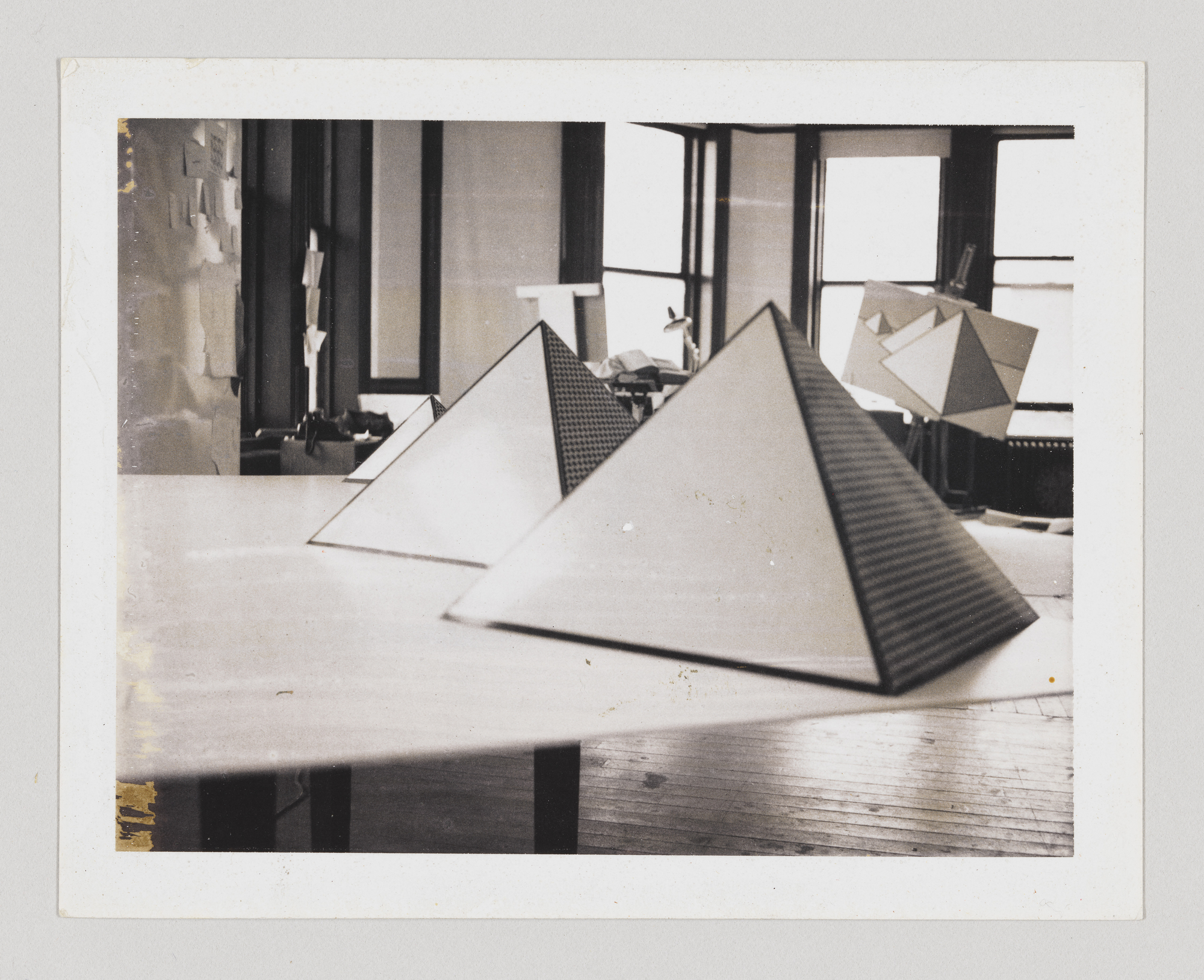
Roy Lichtenstein, Untitled [pyramid], c. 1970. Dye diffusion transfer print (Polaroid), 3 3/8 × 4 3/16 in. (8.5 × 10.7cm). Whitney Museum of American Art, New York; The Roy Lichtenstein Study Collection, gift of the Roy Lichtenstein Foundation 2019.234.12. © Estate of Roy Lichtenstein/DACS 2026
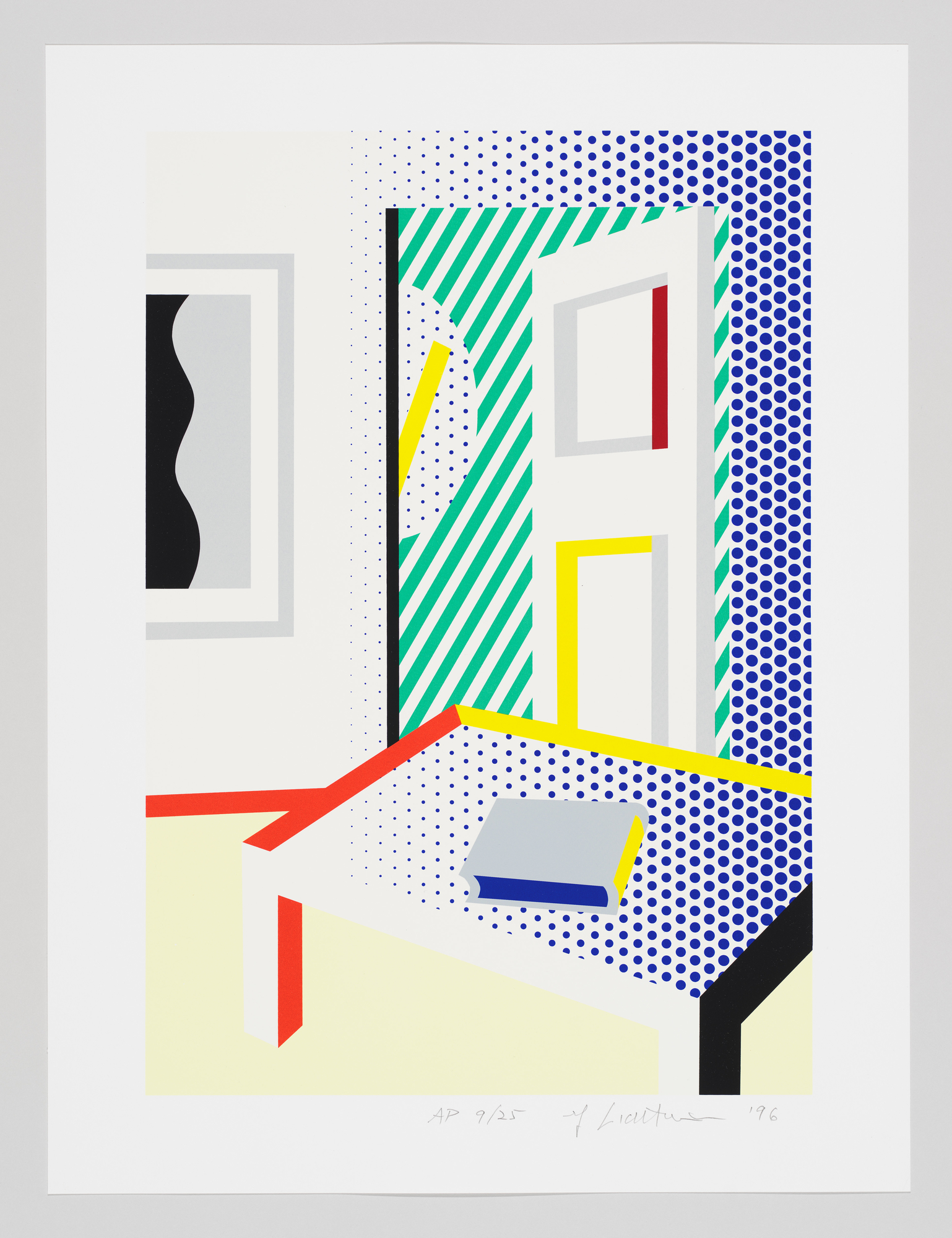
Roy Lichtenstein, Virtual Interior with Book, 1996, from American Academy of Arts and Letters: Centennial Portfolio. Screenprint: sheet, 23 15/16 × 18 in. (60.8 × 45.7 cm); image, 20 3/16 × 13 15/16 in. (51.3 × 35.4 cm). Whitney Museum of American Art, New York; The Roy Lichtenstein Study Collection, gift of the Roy Lichtenstein Foundation 2019.209. © Estate of Roy Lichtenstein/DACS 2026
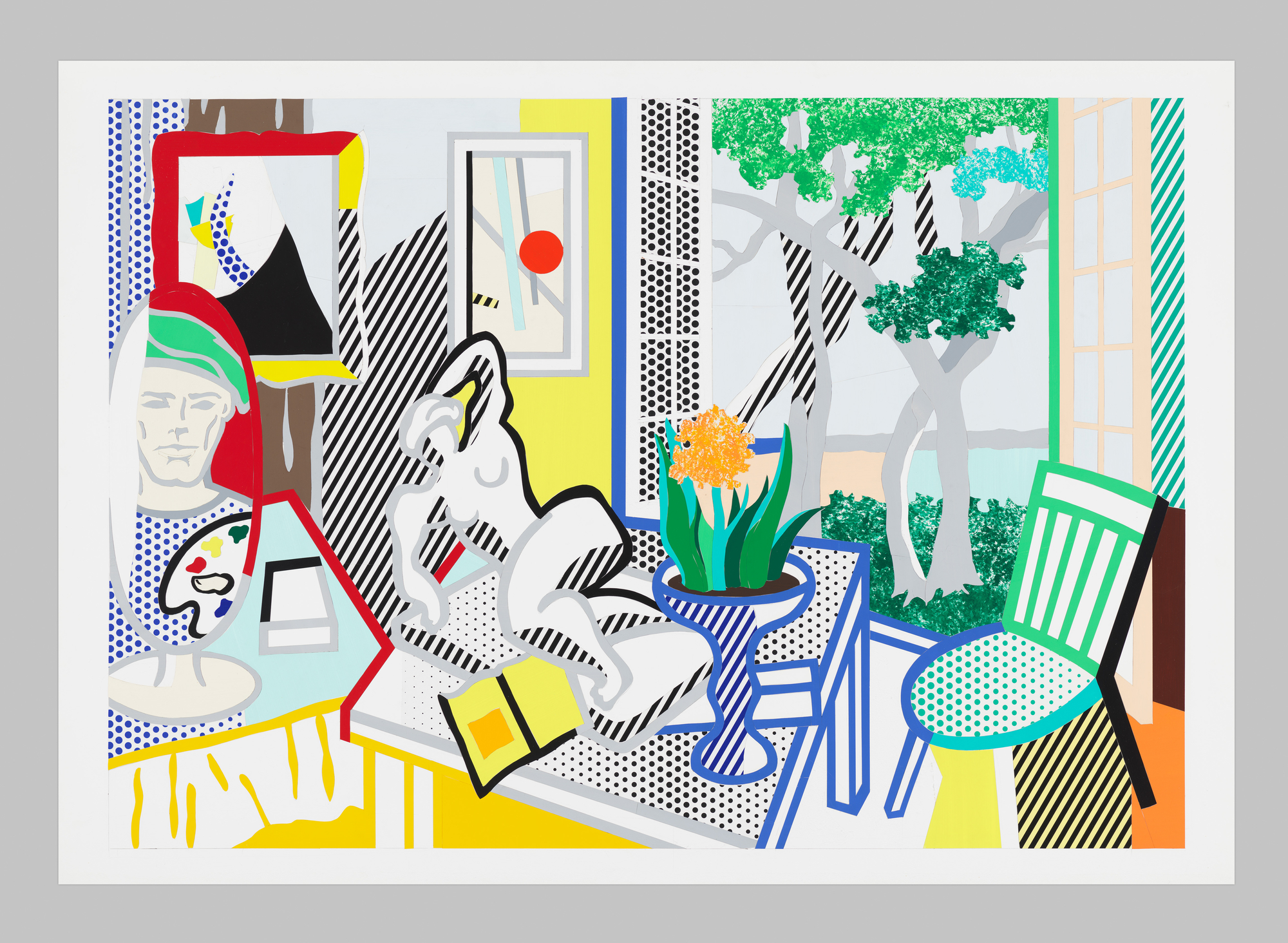
Roy Lichtenstein, Bellagio Hotel Mural: Still Life with Reclining Nude (Study), 1997. Collage and graphite pencil on board: sheet, 38 5/8 × 54 5/16 in. (98.1 × 138 cm); image, 36 1/2 × 52 3/16 in. (92.7 × 132.6 cm). Whitney Museum of American Art, New York; The Roy Lichtenstein Study Collection, gift of the Roy Lichtenstein Foundation 2019.79. © Estate of Roy Lichtenstein/DACS 2026
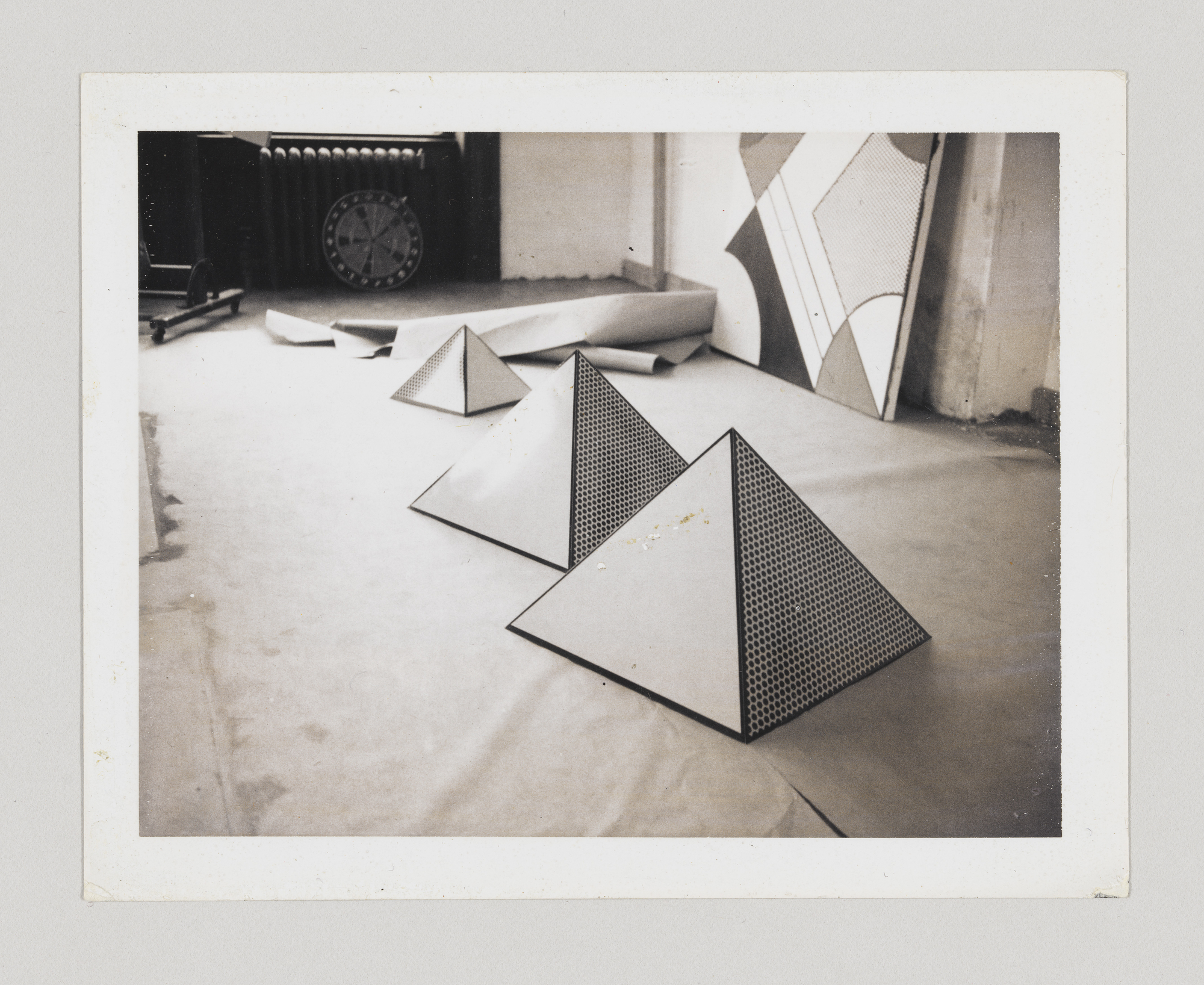
Roy Lichtenstein, Untitled [pyramid], c. 1970. Dye diffusion transfer print (Polaroid), 3 3/8 × 4 3/16 in. (8.5 × 10.7cm). Whitney Museum of American Art, New York; The Roy Lichtenstein Study Collection, gift of the Roy Lichtenstein Foundation 2019.234.15. © Estate of Roy Lichtenstein/DACS 2026
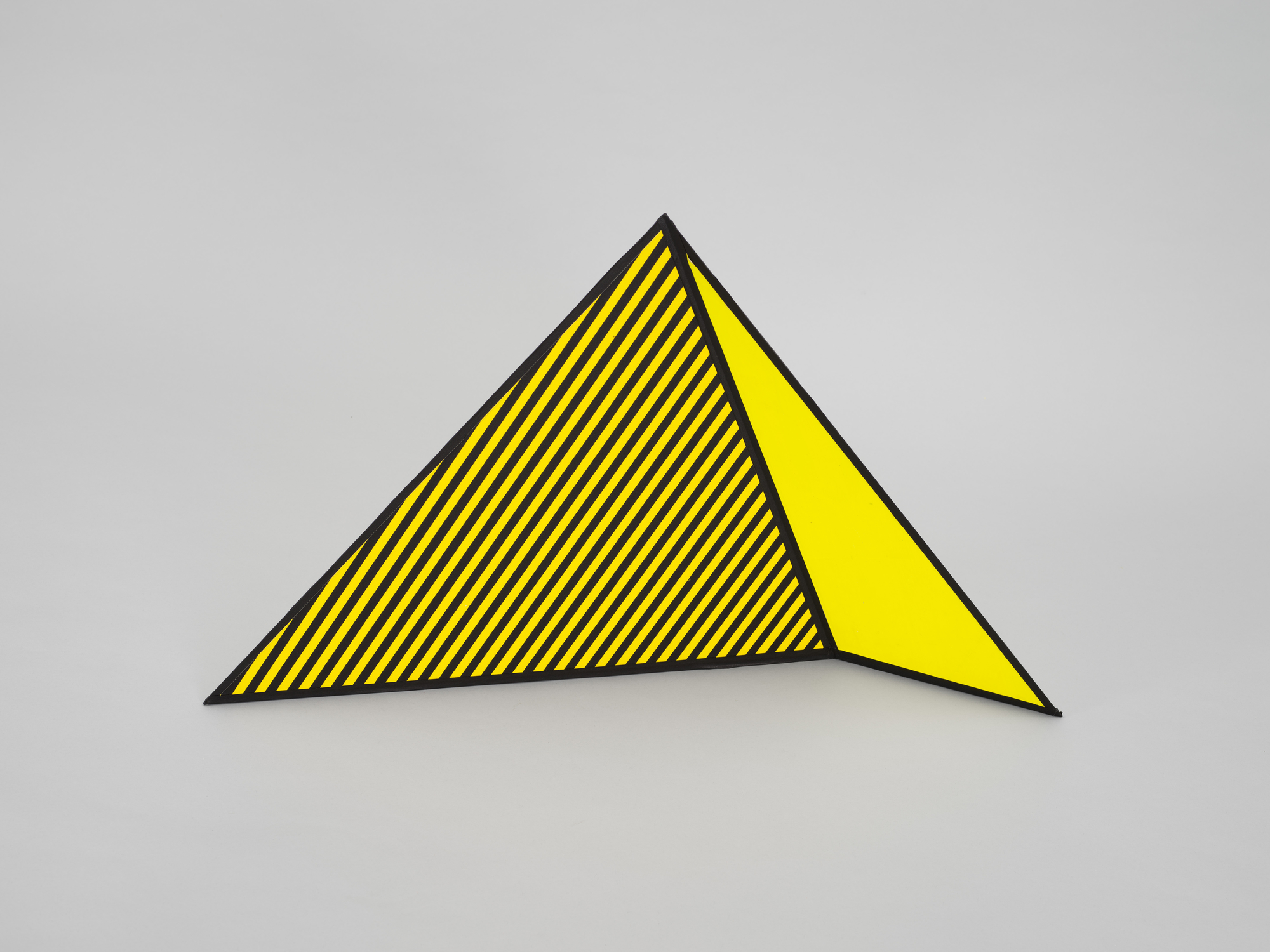
Roy Lichtenstein, Pyramid (Maquette), c. 1996. Collaged paper and tape on foamcore, 17 1/16 × 28 3/4 × 5 in. (43.3 × 73 × 12.7 cm). Whitney Museum of American Art, New York; The Roy Lichtenstein Study Collection, gift of the Roy Lichtenstein Foundation 2019.228. © Estate of Roy Lichtenstein/DACS 2026
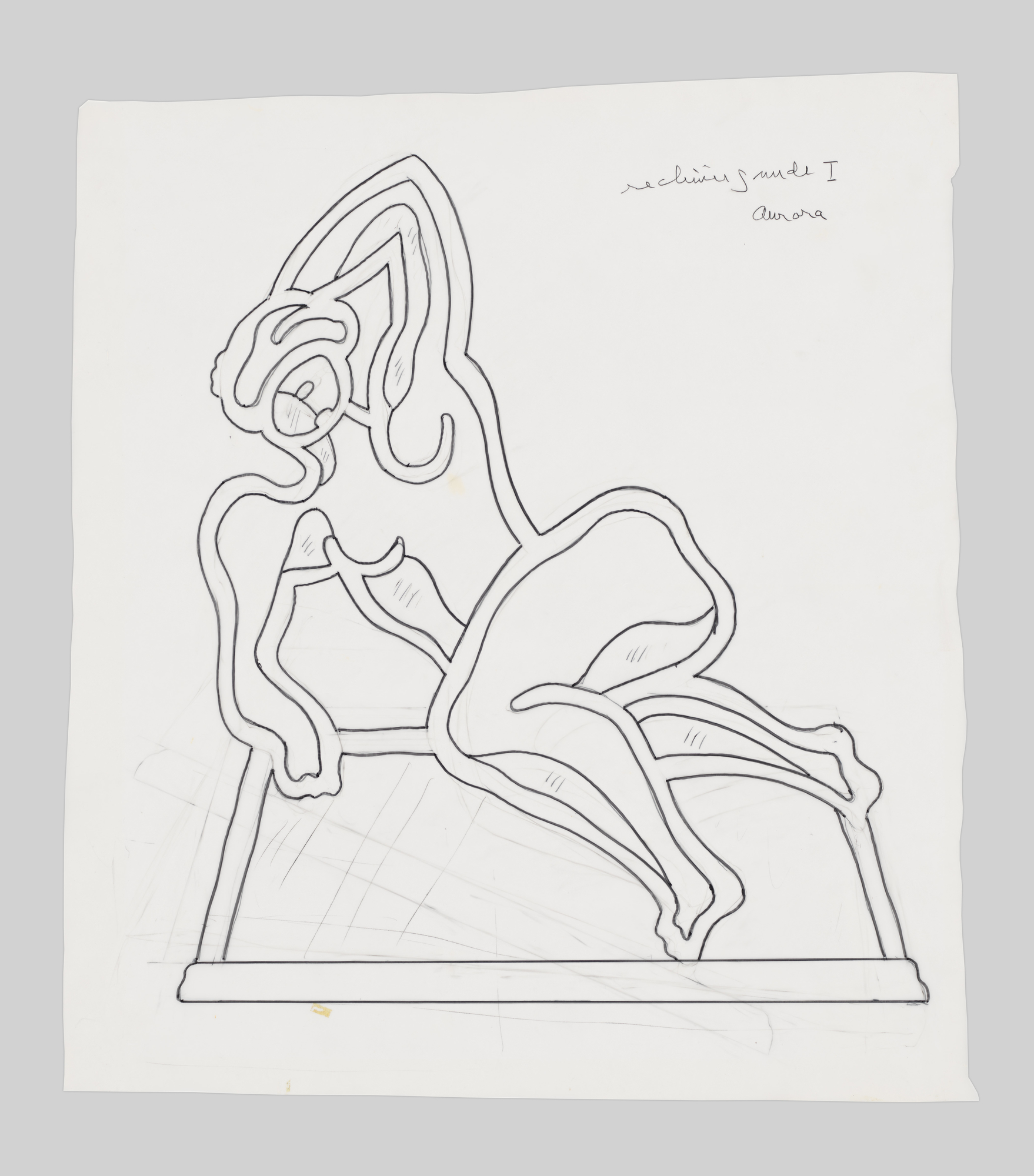
Roy Lichtenstein, Reclining Nude I, Aurora (Study), 1997. Graphite and marker on polyester tracing film, 23 1/4 × 20 3/8 in. (59.1 × 51.8 cm). Whitney Museum of American Art, New York; The Roy Lichtenstein Study Collection, gift of the Roy Lichtenstein Foundation 2019.275. © Estate of Roy Lichtenstein/DACS 2026
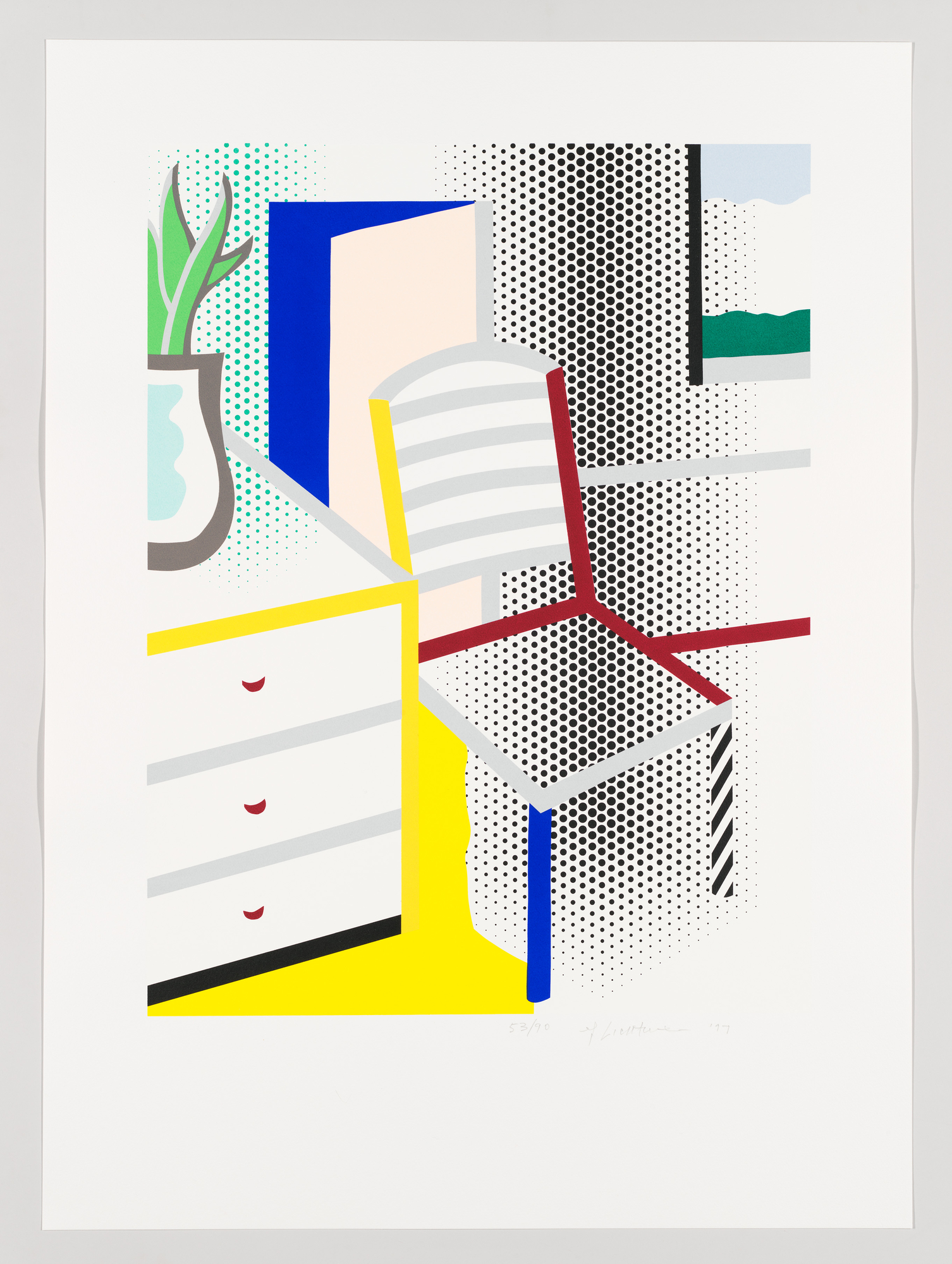
Roy Lichtenstein, Interior with Chair, 1997, from the portfolio Leo Castelli 90th Birthday Portfolio. Screenprint: sheet, 37 × 27 in. (94 × 68.6 cm); image, 27 1/16 × 20 9/16 in. (68.7 × 52.2 cm). Edition 53/90. Whitney Museum of American Art, New York; gift of Jean-Christophe Castelli and tribute from the artists in honor of Leo Castelli 99.63.4. © Estate of Roy Lichtenstein/DACS 2026
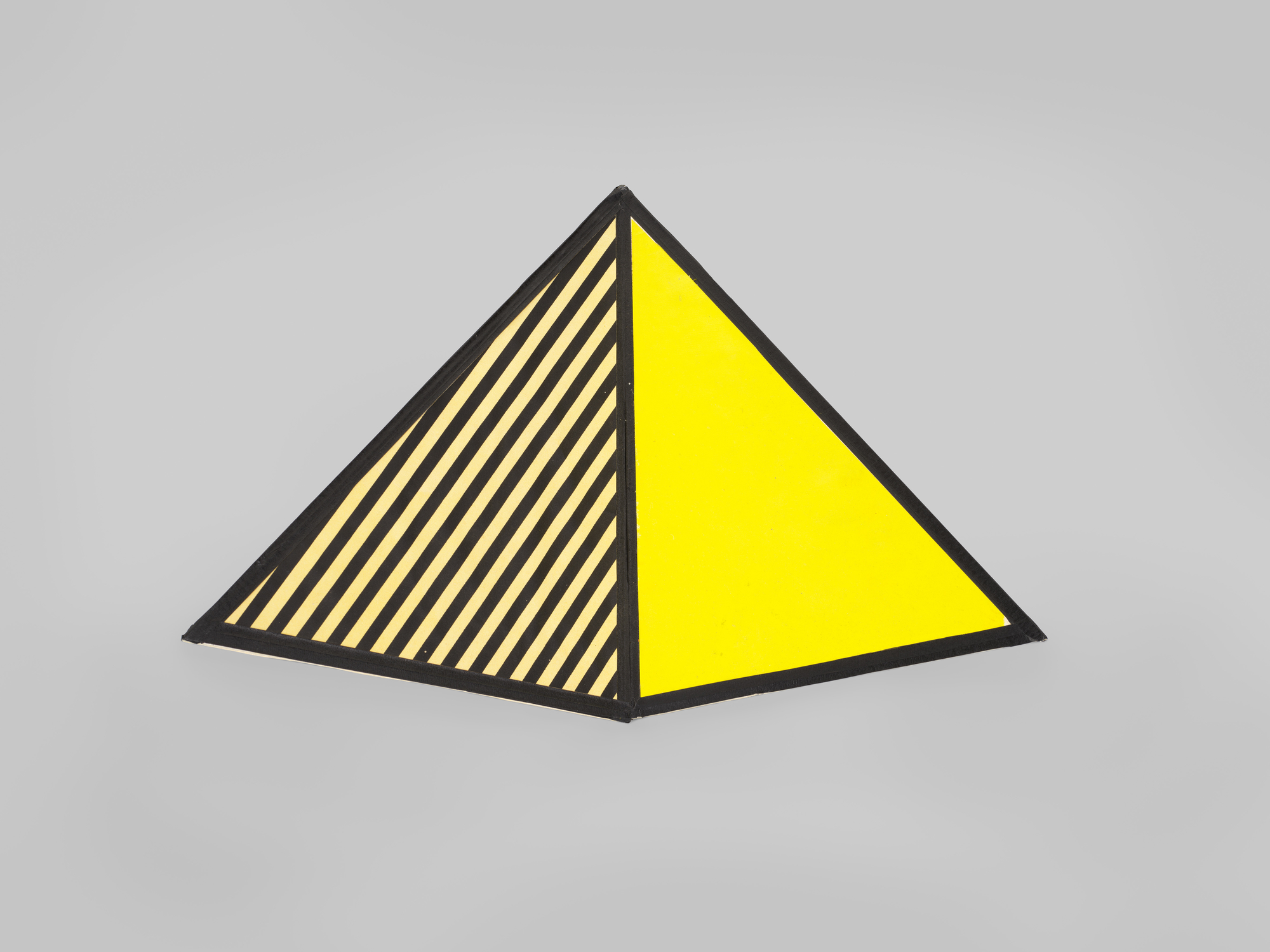
Roy Lichtenstein, Wall Pyramid (Model), c. 1996. Collaged paper and tape on board, 13 1/2 × 19 5/8 × 6 1/2 in. (34.3 × 49.8 × 16.5 cm). Whitney Museum of American Art, New York; The Roy Lichtenstein Study Collection, gift of the Roy Lichtenstein Foundation 2019.233. © Estate of Roy Lichtenstein/DACS 2026
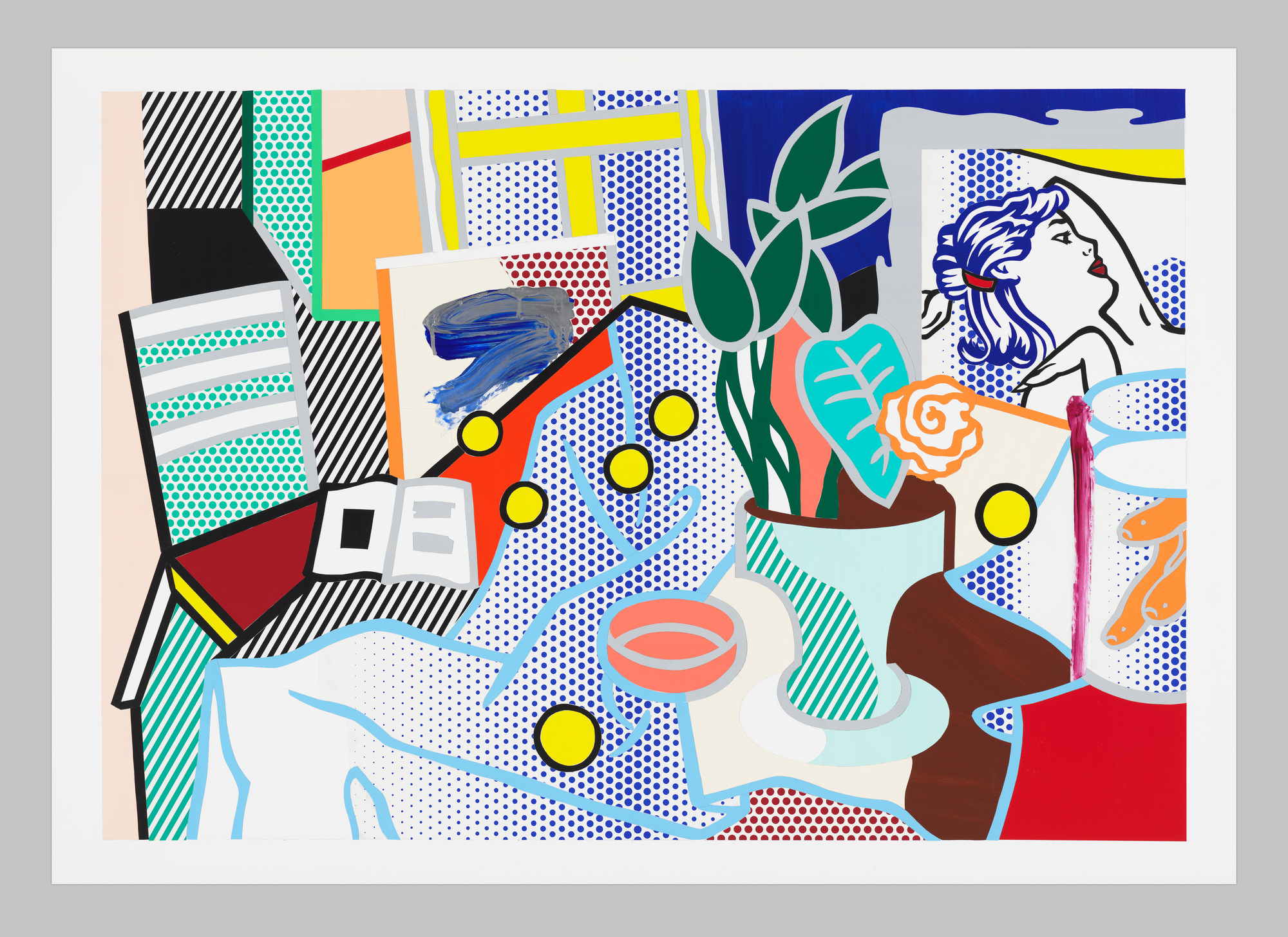
Roy Lichtenstein, Bellagio Hotel Mural: Interior with Painting of Reclining Nude (Study), 1997. Collage and graphite pencil on board: sheet, 36 × 51 3/4 in. (91.4 × 131.4 cm); mount, 38 × 52 7/8 in. (96.5 × 134.3 cm). Whitney Museum of American Art, New York; The Roy Lichtenstein Study Collection, gift of the Roy Lichtenstein Foundation 2019.78. © Estate of Roy Lichtenstein/DACS 2026
