Tuesday, February 12, 2019

Hidden Treasures/ Impressionist and Modern Art 27 February 2019 at Christie's in London


Christie’s 20th Century Season will launch on 27 February with Hidden Treasures: Impressionist & Modern Masterpieces from An Important Private Collection, a prestigious collection of 23 seminal works by the leading Impressionist and Modern artists. Hidden Treasures will be led by
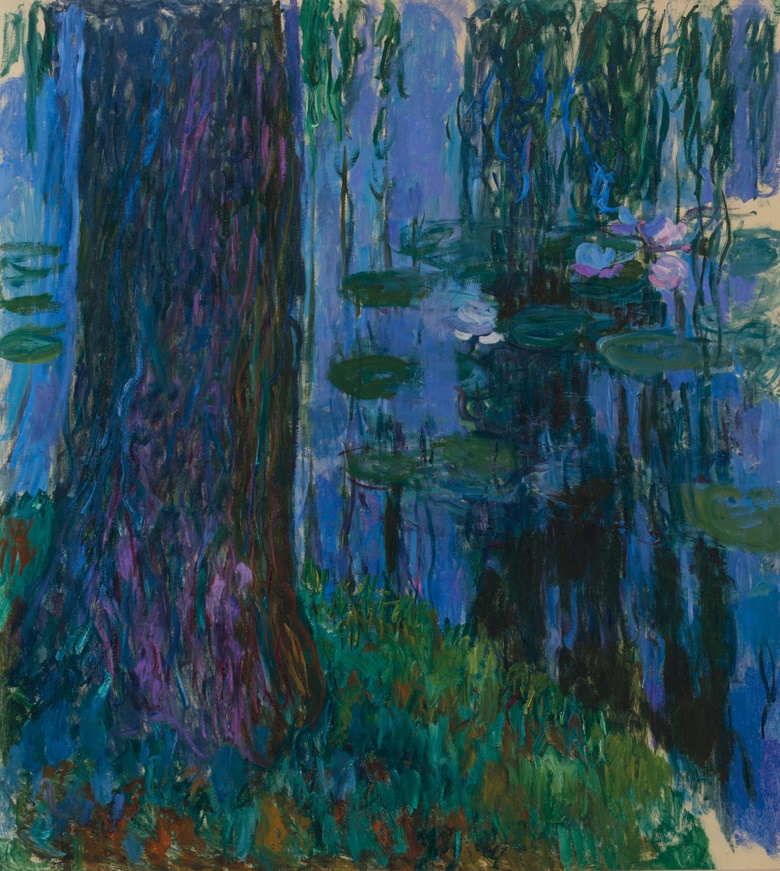

Claude Monet, Saule pleureur et bassin aux nymphéas, 1916-1919. Oil on canvas. 78¼ x 70¾ in. Estimate on request. Offered in Hidden Treasures on 27 February at Christies in London

Claude Monet, Saule pleureur et bassin aux nymphéas, 1916-1919. Oil on canvas. 78¼ x 70¾ in. Estimate on request. Offered in Hidden Treasures on 27 February at Christie's in London

Claude Monet’s Saule pleureur et bassin aux nymphéas (1916-19, Estimate on Request).


Further highlights include Paul Cézanne’s Nature morte de pêches et poires (1885-87, Estimate on Request)
 Vincent Van Gogh, Portrait de femme: buste, profil gauche, (December 1885-January 1886), private collection


and Vincent van Gogh’s historically important Antwerp period portrait Portrait de femme: buste, profil gauche (1885, estimate: £8,000,000-12,000,000), one of only two works painted in Antwerp specifically mentioned in correspondence with his brother Theo. (Fascinating article here.)

The collection precedes the Impressionist and Modern Art Evening Sale on 27 February 2019.

The Evening Sale will be led by a group titled An Adventurous Spirit: An Important Private Collection Sold to Benefit a Charitable Foundation. The group consists of six paintings of rare importance and quality by Paul Signac, Gustave Caillebotte, Félix Vallotton, Édouard Vuillard and Giovanni Boldini.
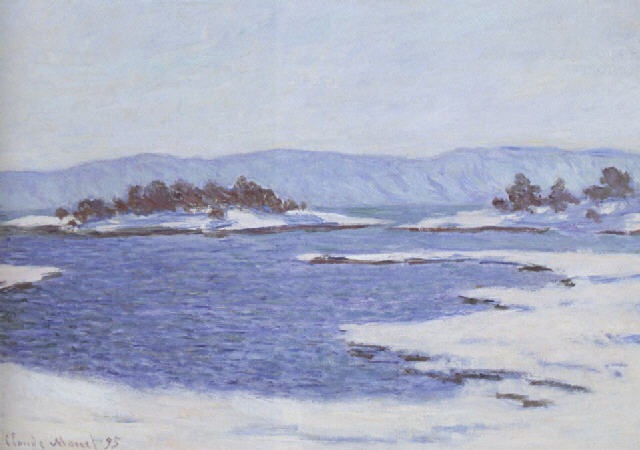


Further highlights include Claude Monet’s Au bord du fjord de Christiania (1895, estimate: £4,500,000-6,500,000),

  • Félix Vallotton (1865-1925) En promenade
    Estimate GBP 1,200,000 - GBP 1,600,000
    (USD 1,551,600 - USD 2,068,800)
    Lot 25
  • Paul Signac (1863-1935) Le Port au soleil couchant, Opus 236 (Saint-Tropez)
    Estimate on request
    Lot 26
  • Auguste Rodin (1840-1917) Le Penseur, petit modèle
    Estimate GBP 1,000,000 - GBP 2,000,000
    (USD 1,293,000 - USD 2,586,000)
    Lot 31
  • Le Corbusier (1887-1965) Deux figures au tronc d'arbre jaune
    Estimate GBP 2,000,000 - GBP 3,000,000
    (USD 2,586,000 - USD 3,879,000)
    Lot 32

Deux figures au tronc d'arbre jaune by Le Corbusier (1937, estimate: £2,000,000-3,000,000),
Edgar Degas’s Danseuses dans une salle d'exercice (Trois Danseuses) (1873, estimate: £800,000-1,200,000),

Pablo Picasso (1881-1973)
Pablo Picasso (1881-1973) Nature morte au crâne de taureau
Estimate GBP 4,000,000 - GBP 6,000,000
(USD 5,172,000 - USD 7,758,000)
Lot 37

Pablo Picasso’s Nature morte au crâne de taureau (1942, estimate: £4,000,000-6,000,000)

  • Kees van Dongen (1877-1968) Madame T
    Estimate GBP 1,000,000 - GBP 1,500,000
    (USD 1,293,000 - USD 1,939,500)
    Lot 39
  • Gustave Caillebotte (1848-1894) L'Assiette de pêches
    Estimate GBP 800,000 - GBP 1,200,000
    (USD 1,034,400 - USD 1,551,600)
    Lot 43

Alexej von Jawlensky (1864-194

and Alexej von Jawlensky’s boldly coloured Blaue Schürze (1909, estimate: £2,000,0003,000,000).

HIDDEN TREASURES
Tracing the key artistic movements that defined the late 19th and 20th centuries, the collection is comprised of 23 works. The earliest painting is Renoir’s Sentier dans le bois (1874-77, estimate: £7,500,000-10,500,000). Nearly three-quarters of a century later, Matisse completed Danseuse assise sur une table, fond rouge (1942, estimate: £4,500,000-7,000,000), a vibrant and striking exploration of the femme-fleur and chronologically the final painting in this group.

Leading highlights include Monet’s Saule pleureur et bassin aux nymphéas, (above)which was once in the collection of the artist’s son Michel. It is an incandescent monumental-scale canvas conceived in conjunction with his Grandes décorations, the series of 22 waterlily paintings that he donated to the French state to commemorate the end of the First World War.


Cézanne sought to distil the transient phenomena of nature into an ideal, abstract order. His magisterial Nature morte de pêches et poires is imbued with a dignity and restraint that befits the artist’s goal, and is one of the most modern and timeless of the artist’s iconic still lifes. The work was first owned by Ambroise Vollard, who acquired Nature morte de pêches et poires directly from the artist. Vollard was key to the popularity and sale of Impressionist masterpieces across Europe, and sold the work to the important early German collector of Impressionist art, Kurt von Mutzenbecher. The work then spent many years with another key German collector of Impressionism, Otto Henkell, before joining the renowned United States collection of Col. Edgar William and Bernice Chrysler Garbisch in the 1960s. Nature morte de pêches et poires has not been seen in public for over 30 years.

The signature vigour of the brushwork, the vivid characterisation of the young female model, and no less the startling appearance of the large red hair ribbon –– a flourish without precedent in the earlier art of Vincent van Gogh — have made Portrait de femme: buste, profil gauche (above) the most often illustrated and representative of the small number of oil paintings that are known to exist from the painter’s three-month stay in Antwerp. He left for Antwerp on 28 November 1885 and soon after arrival indeed started painting the picturesque monuments of the city and sought out models for making portraits. None of the painted townscapes mentioned in his letters survived, but five portraits out of what must have at least been a group of nine did. Four are currently in the Van Gogh Museum, Portrait de femme, buste, profil gauche is the fifth. Further artists in the collection include Edgar Degas, Kees van Dongen, Aristide Maillol, Emil Nolde, Chaim Soutine, Maurice Utrillo, Édouard Vuillard, and Maurice de Vlaminck.

AN ADVENTUROUS SPIRIT
An Adventurous Spirit provides a remarkable view of a unique collection across many fields, from Impressionism to 20th Century Design, which was shown in beautiful homes in London, Saint Tropez and Saint Barths. Six major paintings by Paul Signac, Gustave Caillebotte, Félix Vallotton, Édouard Vuillard and Giovanni Boldini will highlight the Impressionist & Modern Art Evening Sale.

 Paul Signac (1863-1935)

The most important painting by Paul Signac to come to auction in 20 years, Le Port au soleil couchant, Opus 236 (Saint-Tropez) (1892, Estimate on Request) is one of the first and finest works that the artist painted in St Tropez. Rendered in Signac’s quintessential pointillist style, this painting is a masterpiece of the artist’s Opus works and is set to achieve a new auction record for the artist.


Gustave Caillebotte, Chemin montant, 1881, Estimate on Request. © Christie's Images Ltd 2019.

A rare, and only recently rediscovered Impressionist masterpiece, Gustave Caillebotte’s Chemin montant (Estimate on Request), painted in Trouville in 1881, brings together the two main aspects of the artist’s oeuvre: the iconic urban figure paintings of the 1870s, and his landscapes and garden scenes of the next decade.

 Félix Vallotton (1865-1925)
Félix Vallotton (1865-1925) En promenade
Estimate GBP 1,200,000 - GBP 1,600,000
(USD 1,551,600 - USD 2,068,800)
Lot 25

With its daring composition and use of bold planes of colour, Félix Vallotton’s En promenade (painted circa 1895, estimate: £1,200,000-1,600,000) encapsulates the artist’s mastery of the pictorial vocabulary of Les Nabis. This masterful painting has been requested for the forthcoming exhibition on the artist to be held at the Royal Academy, London and the Metropolitan Museum of Art, New York in 2019.

https://upload.wikimedia.org/wikipedia/commons/e/e2/Giovanni_Boldini_%281842-1931%29_-_A_Portrait_of_John_Singer_Sargent.jpg

Giovanni Boldini’s Portrait of John Singer Sargent (1890, estimate: £200,000-300,000) is a vivid testament to the friendship between two of the leading portraitists of fin-de-siècle Paris. This portrait, one of three that Boldini painted of Sargent, dates from a pivotal period in the artist’s career during which he received widespread acclaim for his unique form of portraiture, capturing a host of socialites and actresses, as well as fellow artists and friends, including Whistler, Verdi, Degas and Paul Helleu.

CLAUDE MONET

 
Monet had always been concerned with the transformative effects of winter, capturing the fleeting effects of ice, fog, snow and frost. Seeking to find the most authentic winter scenery, Monet travelled to Norway, arriving on 1 February 1895. Au bord du fjord de Christiania (1895, estimate: £4,500,000-6,500,000) depicts the crystal blue waters
of the fjord lapping against the small, isolated islands that dot this stretch of water.

LE CORBUSIER 

Le Corbusier (1887-1965) 
Le Corbusier (1887-1965) Deux figures au tronc d'arbre jaune
Estimate GBP 2,000,000 - GBP 3,000,000
(USD 2,586,000 - USD 3,879,000)
Lot 32


On a monumental scale, two nude figures serve as the abstracted protagonists of Le Corbusier’s masterpiece Deux figures au tronc d’arbre jaune of 1937 (estimate: £2,000,000-3,000,000). Included in the important retrospective of the artist held in Zurich in 1938, this large and impressive composition, not seen in public since the early 1980s, presents the artist’s favoured motif of this period: the female nude.

PABLO PICASSO

 Pablo Picasso (1881-1973)
Pablo Picasso (1881-1973) Nature morte au crâne de taureau
Estimate GBP 4,000,000 - GBP 6,000,000
(USD 5,172,000 - USD 7,758,000)
Lot 37
 
Painted on 9 May 1942, the vibrant Nature morte au crâne de taureau (1942, estimate: £4,000,000-6,000,000) emerged during a period of intense reflection in Picasso’s painting, as he endured the hardships and claustrophobia of life in occupied Paris. Nature morte au crâne de taureau will be offered at auction for the first time on 27 February. Focusing on the ordinary objects in his studio, the people closest to him, and the comings and goings of his daily experiences in Paris, his paintings, drawings and sculptures during this period chronicle the everyday life of the city during German invasion.

ALEXEJ VON JAWLENSKY


Alexej von Jawlensky (1864-1941) Blaue Schürze
Estimate GBP 2,000,000 - GBP 3,000,000
(USD 2,586,000 - USD 3,879,000)
Lot 38
 
Painted in 1909, and seen in public for the first time in almost 100 years, Blaue Schürze emerged during one of the most intensively creative and experimental periods of Alexej von Jawlensky’s artistic career, as he endeavoured to translate his visions of the external world through a unique, inner subjective spirit.

EDGAR DEGAS

 
Edgar Degas’s Danseuses dans une salle d'exercice (Trois Danseuses) (1873, estimate: £800,000-1,200,000) is among the first depictions of dancers that the artist created and introduces the themes and motifs that would preoccupy the artist for the rest of his life: the dancer and the rehearsal studio, movement and light, artifice and spontaneity. This small scale tour de force has been in the same noble French family collection for over 80 years, and has not been seen at auction since the prestigious Rouart sale of 1912.

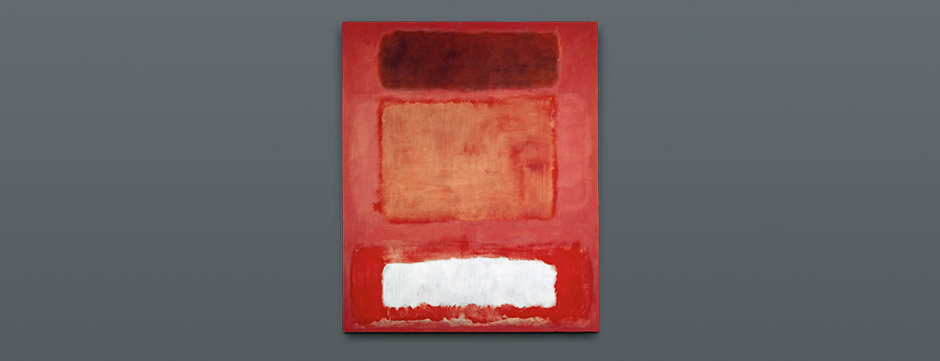
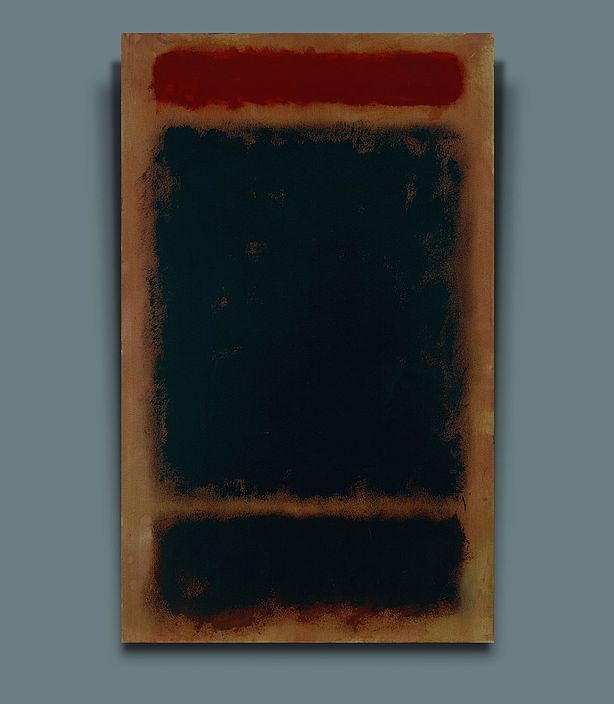
Mark Rothko


The Kunsthistorisches Museum, Vienna
12 March - 30 June, 2019

Mark Rothko

Mark Rothko (1903-1970)
No. 16 (Red, White and Brown)
1957, oil on canvas
© 1998 Kate Rothko Prizel & Christopher Rothko/Bildrecht, Vienna, 2019
© Photo: Kunstmuseum Basel


Mark Rothko (1903–1970) was among the most remarkable artists of the twentieth century. This exhibition, the first ever to be mounted in Austria, brings together more than forty of his major works and presents a survey of Rothko’s artistic career, from his early figurative paintings of the 1930s, through the transitional years of the 1940s to the groundbreaking mature works of the 1950s and 60s.


Mark Rothko, Untitled, 1959/60 © The Collections of Christopher Rothko

The artist’s children, Kate and Christopher have been closely involved in the project from its very beginning, and have themselves kindly lent a number of paintings from the family collection. 

Presented within the Kunsthistorisches Museum, whose historical collections trace some five thousand years human creativity from Ancient Egypt to the Baroque, the exhibition provides a unique opportunity to examine Rothko’s deep and sustained interest in the art of the past. From his earliest visits as a student to the Metropolitan Museum of Art in New York, and his first encounters with Rembrandt, Vermeer and classical art and architecture, to his trips to Europe to see its churches, chapels and Old Master painting collections in Paris, London, Venice, Arezzo, Siena, Rome, Pompeii and Florence, Rothko dedicated himself to the study of historical art and architecture.  

The exhibition underlines the influence of specific places on his stylistic development, from Michelangelo’s Laurentian Library and Fra Angelico’s murals in the convent of San Marco in Florence, to the Greek temples of Paestum and the Baptistery of Torcello in Venice. When Rothko broke with tradition in the latter part of his life to create a radical new form of artistic expression, he did so with extensive knowledge and respect for what had come before. In the words of the critic John Berger, Rothko looked back “in a way such as no painter before had ever done”.
The exhibition reveals the radical development of Rothko’s work across several decades, from his early figurative paintings of the 1930s, through the transitional years of the 1940s to the groundbreaking mature works of the 1950s and 60s. At the heart of the exhibition is an entire gallery of large-scale mural paintings produced in 1958-59, originally commissioned for the Seagram Building in New York. This is followed by a final gallery of classic paintings from the last decade of Rothko’s life that demonstrate how he learnt from the techniques of the Old Masters, layering colour in the manner of Titian and developing a sense of ‘inner light’ similar to that of Rembrandt. 
Curated by Jasper Sharp with the close support and advice of Christopher Rothko, the exhibition will be presented in the Kunsthistorisches Museum’s Picture Gallery. Major loans have been secured from the Rothko Family and the National Gallery of Art, Washington, D.C., in addition to museums including the Fondation Beyeler, Riehen, the Jewish Museum, New York, Kunstmuseum Bern, Kunsthaus Zürich and Kunstmuseum Basel.

Rembrandt, Vermeer & the Dutch Golden Age Masterpieces from The Leiden Collection and the Musée du Louvre


Exhibition will open at Louvre Abu Dhabi on 14 February 2019

    •    The exhibition features 95 artworks and objects including 15 paintings by Rembrandt van Rijn
    •    The exhibition will also include paintings and drawings by Rembrandt’s contemporaries in the Netherlands, as well as several small paintings by 17th-century fine painters, some of which were later owned by King Louis XVI of France
    •    Johannes Vermeer’s The Lacemaker (Musée du Louvre) and Young Woman Seated at a Virginal (The Leiden Collection), painted on canvas cut from the same bolt, will hang next to each other for the first time in 300 years at Louvre Abu Dhabi

Opening on 14 February 2019, the exhibition will survey Rembrandt’s artistic journey in Leiden and Amsterdam and his relationships with rivals and peers, including Johannes Vermeer, Jan Lievens, Ferdinand Bol, Carel Fabritius, Gerrit Dou, Frans van Mieris and Frans Hals.

During the Golden Age, the Dutch Republic established itself as a world leader in trade, science, and the arts. Set against this backdrop of cultural exchange, exploration and discovery, the show will explore the artistic traditions that flourished in Leiden and the wider Netherlands in this period, including the development of a new school of artists, called the fijnschilders (fine painters), best known for their exquisitely rendered scenes of daily life.

The exhibition will feature 22 paintings and drawings from across Rembrandt’s career and his workshop – from his early famed series of allegorical paintings of the senses, which demonstrate the artist’s youthful ingenuity and experimentation with expressions, composition and colour during his Leiden days, to later works created in Amsterdam, including sensitively-rendered portraits, a renowned self-portrait, Self-Portrait with Shaded Eyes and Minerva in Her Study (both from The Leiden Collection), his monumental history painting of the goddess Minerva. These works are displayed alongside paintings by other masters from Rembrandt’s artistic circle, demonstrating the influence that this remarkable group of artists had on each other’s work.

On this extraordinary occasion, Johannes Vermeer’s Young Woman Seated at a Virginal (The Leiden Collection) and The Lacemaker (Musée du Louvre), two paintings on canvas cut from the same bolt, will hang beside one another for the first time in 300 years at Louvre Abu Dhabi.

95 artworks, including paintings, drawings and objects, primarily drawn from The Leiden Collection, one of the largest and most significant private collections of artworks from the Dutch Golden Age, highlighted with the Musée du Louvre exceptional collections. Loans from the Rijksmuseum and the Bibliothèque Nationale de France will complete the presentation. On view until 18 May 2019, the exhibition is curated by Blaise Ducos, Chief Curator of Dutch and Flemish paintings at the Musée du Louvre, and Lara Yeager-Crasselt, Curator of The Leiden Collection and a specialist in seventeenth-century Dutch and Flemish art.

HE Mohamed Khalifa Al Mubarak, Chairman of the Department of Culture and Tourism – Abu Dhabi, commented: “The very inception and early success of Louvre Abu Dhabi was founded on our close friendship with France and our multi-layered partnerships with global museums and art institutions. In 2019, the UAE is celebrating the Year of Tolerance, which is testament to our long standing tradition of nurturing a culture of openness and exchange. The exhibition ‘Rembrandt, Vermeer & the Dutch Golden Age’ illustrates not only the importance of cross border cultural collaborations, but also how artistic creativity has always been at the heart of great historic moments.”

Manuel Rabaté, Director of Louvre Abu Dhabi, stated: “As Louvre Abu Dhabi’s first international exhibition of the year and part of our 2018-19 cultural season ’A World of Exchanges’, the exhibition ‘Rembrandt, Vermeer & the Dutch Golden Age: Masterpieces from The Leiden Collection and the Musée du Louvre’ underscores the connections between artists that, no doubt, made this period “golden”. This is the very first time a blockbuster exhibition of the Dutch masters comes to the UAE and it is extremely special that two Vermeer paintings from the same piece of canvas are hung next to each other for the first time in 300 years. I would like to thank our partners, the Musée du Louvre and The Leiden Collection, for making it possible.”

Jean-Luc Martinez President-Director of the Musée du Louvre, shared: “The great diversity of audiences, from the Emirates, Europe and the Indian sub-continent, and the wonder we observe on these visitors’ faces validate Louvre Abu Dhabi’s commitment to provide a global survey of the universal history of art. With its fifth exhibition, ‘Rembrandt, Vermeer & the Dutch Golden Age: Masterpieces from The Leiden Collection and the Musée du Louvre’, Louvre Abu Dhabi presents the finest works from the magnificent Leiden Collection alongside masterpieces from the Dutch collections of the Musée du Louvre, including Vermeer’s The Lacemaker. Assembled by Thomas S. Kaplan and his spouse Daphne Recanati Kaplan, The Leiden Collection is utterly unique: it has toured the world, travelling from Paris to Abu Dhabi via Shanghai and St Petersburg. In Abu Dhabi, visitors will be able to contemplate many works by Rembrandt and his artistic circle, numerous incredible examples of ‘fine painting’ by the Leiden School, as well as two Vermeers; enabling visitors to grasp the contribution of Dutch culture to the history of European and international painting.”

Lara Yeager-Crasselt, Curator of The Leiden Collection, New York, commented: “Rembrandt, Vermeer & the Dutch Golden Age’ traces two main narratives – Rembrandt’s development as an artist, as seen through The Leiden Collection’s 15 works by the artist, and the development of genre painting in 17th-century Holland, as shown through The Leiden Collection’s extraordinary depth of works by the fijnschilders (fine painters). When brought together with important selections from the Musée du Louvre’s collection, these works offer a distinctive glimpse into the dynamics of artistic exchange that shaped the art of the Dutch Golden Age, while enabling visitors to follow Rembrandt from his early career in Leiden through his ultimate flourishing in Amsterdam, where he stimulated artistic innovations among his pupils and peers.”

Highlights from the Musée du Louvre’s collection include: Johannes Vermeer’s The Lacemaker (1669-70); Gerrit Dou’s Self-Portrait with Palette in a Niche (ca. 1660-65); Ferdinand Bol’s Rebecca and Eliezer at the Well (ca. 1645-46), gifted from The Leiden Collection in 2017; and an engraved nautilus shell (ca. 1660-80). Notable works of art from The Leiden Collection include: Johannes Vermeer’s Young Woman Seated at a Virginal (ca. 1670-72); Rembrandt’s Self-Portrait with Shaded Eyes (1634); Gerrit Dou’s Scholar Interrupted at His Writing (ca. 1635); Jan Lievens’ Boy in a Cape and Turban (Portrait of Prince Rupert of the Palatinate) (ca. 1631); and Rembrandt van Rijn’s Young Lion Resting (ca. 1638-42). The exhibition also includes a very rare and beautifully-crafted 17th century ship model from the Rijksmuseum. It is the first time such an object will travel to the UAE. 

Blaise Ducos, Chief Curator of Dutch and Flemish paintings at the Musée du Louvre, declared: “During the 17th century, exceptional economic, social and political circumstances enabled one country, The Republic of the United Provinces, to become the world’s leading economic power. The Dutch were living in what they considered a ‘Golden Age’. In this context, major artistic figures like Rembrandt or Vermeer flourished. Through the confrontation of masterpieces from the Musée du Louvre and The Leiden Collection, this exhibition tells this extraordinary story. This show does not intend to provide a panorama of Dutch painting in the 17th century, but by mentioning different glimpses, first and foremost through Leiden’s sight; it refers to the culture of artistic exchange within which Vermeer worked.”

The exhibition will unfold throughout six sections:
    •    At the Heart of the Dutch Golden Age;
    •    Extraordinary Beginnings: Rembrandt van Rijn in Leiden;
    •    The Center of the Golden Age: Rembrandt van Rijn in Amsterdam (this section includes a special cabinet of prints and drawings);
    •    Fine Painting in Leiden: Gerrit Dou, Frans van Mieris, and their Contemporaries;
    •    Picturing Everyday life in the Dutch Republic;
    •    Historical Lessons and Tales of Morality.

Thomas Kaplan, founder of The Leiden Collection, observed: “My family considers Louvre Abu Dhabi to represent the single most important cultural initiative of our generation – and this exhibition of treasures from the Dutch Golden Age to be our greatest ‘passion project’. By bringing The Leiden Collection to Abu Dhabi in collaboration with the Musée du Louvre, we gratefully honour our deep relationship with France as well as our profound partnership with the Emirates, the shared values of which extend from wildlife conservation to preserving endangered cultural heritage. We also pay homage to the genius of Rembrandt and Vermeer, whose transcendent influence and illuminating insights continue to inspire artists and the public across the globe and right up to the present time. More than any other painter’s legacy, we believe Rembrandt’s ability to touch the soul represents a uniquely fitting expression of this visionary Franco-Emirati project seeking to promote tolerance and the common civilization of mankind.”

Alongside the exhibition, Louvre Abu Dhabi will announce a rich cultural programme featuring film screenings curated by Emirati artist Hind Mezaina, a pop-up costumed performance in the museum galleries as well as talks and workshops, including a lecture given on opening day by The Leiden Collection and Musée du Louvre curators.

The exhibition runs from 14 February to 18 May 2019.

Entrance to the exhibition is free with the museum ticket. Children under 13 enter the museum free. Visitors can tour the exhibition through a multimedia guide that is available in Arabic, English, and French.

For more information on the exhibition or ticket bookings, please visit www.louvreabudhabi.ae or call Louvre Abu Dhabi at +971 600 56 55 66.

For more information and all the images below go to:

https://arthistorynewsreport.blogspot.com/2017/01/masterpieces-of-leiden-collection-age.html


Rembrandt van Rijn (1606-1669)
Self-Portrait with Shaded Eyes
1634
Oil on panel
New York, The Leiden Collection

© The Leiden Collection, New York


Johannes Vermeer (1632-1675),
The Lacemaker
ca. 1669-70,
Oil on canvas mounted on panel,
Paris, Musée du Louvre
©RMN-Grand Palais (musée du Louvre)/Gérard Blot

Johannes Vermeer (1632-1675)
Young Woman Seated at a Virginal
ca. 1670-72
Oil on canvas
New York, The Leiden Collection


© The Leiden Collection, New York

Johannes Vermeer (1632-1675)
Jeune femme assise au virginal
vers 1670-1672
Huile sur toile
New York, collection Leiden


© The Leiden Collection, New York

ة
Cornelis van Bellekin (about 1625-after 1711)
Nautilus shell engraved with scenes of the Roman divinities Bacchus and Diana Bathing
ca. 1660-80
Nautilus shell (mother of pearl) engraved and blackened, turned wood and gilt bronze
Paris, Musée du Louvre

© Musée du Louvre, dist. RMN – Grand Palais / Martine Beck-Coppola


Jan Lievens (1607-1674)
Boy in a Cape and Turban (Portrait of Prince Rupert of the Palatinate)
ca. 1631
Oil on panel
New York, The Leiden Collection

© The Leiden Collection, New York


Gerrit Dou (1613-1675)
Self-Portrait with Palette in a Niche
ca. 1660-65
Oil on panel
Paris, Musée du Louvre

© RMN-Grand Palais (musée du Louvre) / Tony Querrec


Gerrit Dou (1613-1675)
Scholar Interrupted at His Writing
ca. 1635
Oil on panel
New York, The Leiden Collection

© The Leiden Collection, New York


Ferdinand Bol (1616-1680)
Rebecca and Eliezer at the Well
ca. 1645-46
Oil on canvas
Paris, musée du Louvre

© RMN-Grand Palais (musée du Louvre) / Adrien Didierjean

Rembrandt van Rijn (1606-1669)
Bust of a Bearded Old Man
1633
Oil on paper, mounted on panel
New York, The Leiden Collection
© The Leiden Collection, New York

Dutch warship
1648
Wood, rope, lead, textile and paint
Amsterdam, Rijksmuseum
© Rijksmuseum, Amsterdam


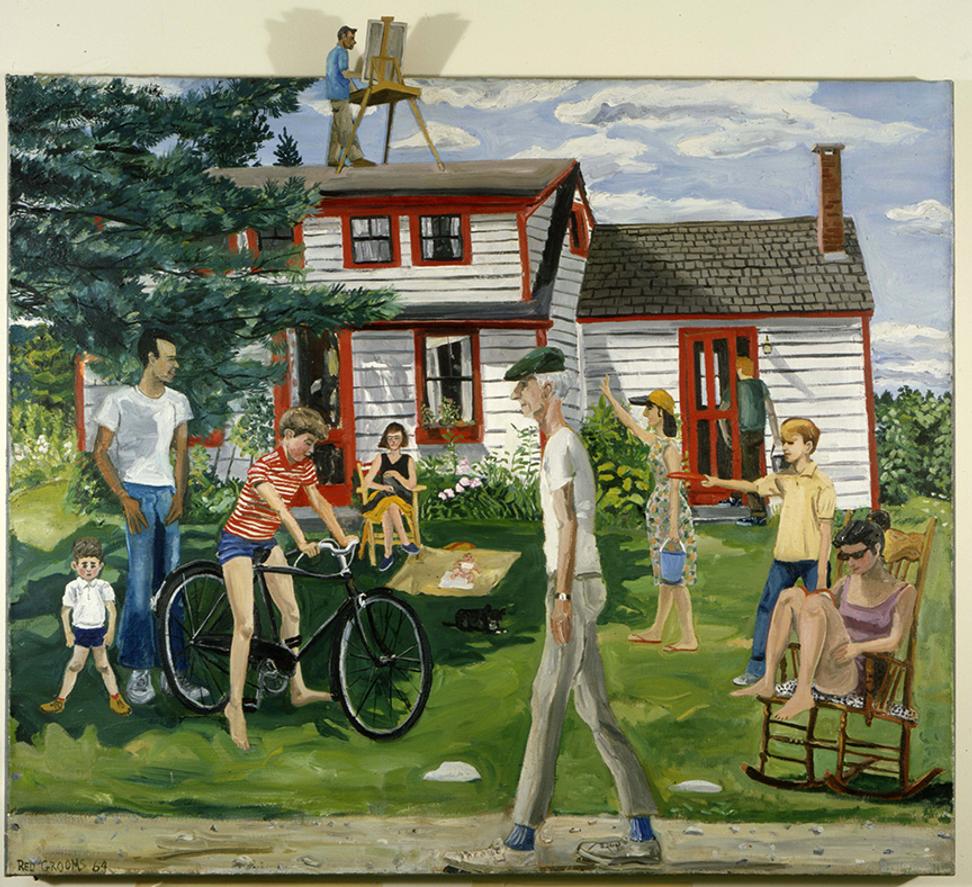
Slab City Rendezvous: Red Grooms, Mimi Gross, Yvonne Jacquette, Alex Katz, Neil Welliver


Red Grooms, Slab City Rendezvous, 1964, Oil on canvas with wood and cardboard, 56 1/2 x 60 in., Collection of Drs.  Debra E.  Weese-Mayer and Robert N.  Mayer
 
Red Grooms, Slab City Rendezvous, 1964, Oil on canvas with wood and cardboard, 56 1/2 x 60 in., Collection of Drs. Debra E. Weese-Mayer and Robert N. Mayer

On Saturday, April 13, 2019, the Farnsworth Art Museum in Rockland, Maine will open a major exhibition of close to forty works by 13 artists whose work contributed to Maine’s important place in the evolution of contemporary art. Entitled Slab City Rendezvous, this exhibition will include works by Rudy Burckhardt, Lois Dodd, Rackstraw Downes, Red Grooms, Mimi Gross, Yvonne Jacquette, Alex Katz, Neil Welliver, and Bernard Langlais, among others. Slab City is the name of the road in the Midcoast village of Lincolnville on which Katz and Dodd bought an old farmhouse in 1954, beginning the summer gatherings of these artist friends. The show will be on display in the museum’s Crosman Gallery through February 9, 2020.
Slab City Rendezvous, whose title comes from a 1964 painting by Red Grooms, features the work of a group of young New York-based avant-garde artists who in the years following World War II discovered the pleasures of summering and working in Maine. They became some of the most successful and important artists of their generation, charting new directions for contemporary art. Their work presented a return to realism and figuration in the face of Abstract Expressionism, the style then dominating the increasingly important center of international contemporary art in New York. Their accomplishments formed another chapter in the story of Maine’s ongoing role in American art.
This summer, the Farnsworth Art Museum will present the annual Maine in America Award to Rudy Burckhardt, Lois Dodd, Rackstraw Downes, Red Grooms, Mimi Gross, Yvonne Jacquette, Alex Katz, and Neil Welliver for their outstanding contribution to Maine’s role in American art. The presentation will take place during the museum’s 2019 Summer Gala, on Friday, July 19 on the Farnsworth campus.

Monday, February 11, 2019

Gainsborough’s Family Album

Princeton University Art Museum
Feb. 23-June 9, 2019

Images of family may be a constant presence in contemporary life, but in the days before photography only the wealthiest had access to them. The British artist Thomas Gainsborough (1727-1788) created more images of his family than any artist before him—pictures of his wife, father, sisters, pets and most particularly his two young daughters—leaving a remarkable visual legacy that is both poignant and ahead of its time.

            Gainsborough’s Family Album gathers together more than 40 of Gainsborough’s depictions of his family for the first time in history, including 10 of the surviving portraits of Gainsborough’s daughters. The exhibition explores how these portraits not only expressed the artist’s warmth and affection for his family but also helped advance his career, from humble provincial beginnings to the height of metropolitan fame. In doing so, the exhibition demonstrates how Gainsborough reflected and helped shape new ideas of the family that endure today.

       Gainsborough’s Family Album is organized by the National Portrait Gallery, London, in association with the Princeton University Art Museum. Tracing the full arc of Gainsborough’s career through family portraiture, the exhibition draws from notable public and private collections from across Great Britain and the United States.

            The Princeton University Art Museum, where the exhibition will be on view Feb. 23 through June 9, 2019, is the only North American venue.

       “This historic exhibition and related publication relates a powerful and very modern story of familial love by one of the great masters in the European canon,” said James Steward, Nancy A. Nasher–David J. Haemisegger, Class of 1976, director. “Gainsborough’s interest in returning again and again to his family as the subject for his art shows us the artist at his freshest, most personal and least filtered, and offers surprising glimpses into new ideas of the family united by affection.”

       One of Britain’s most prominent and successful artists, Gainsborough was renowned as a portraitist of exceptional liveliness and subtlety, whose fashionable sitters appear to have deftly stepped inside compositions suffused with remarkable effects of light, air and feathery materiality. From modest rural beginnings, Gainsborough rose to become one of the most acclaimed painters of the age, depicting royals, aristocrats and the changing nature of Britain itself at the dawn of the Industrial Revolution.

       The exhibition is anchored by paintings of Gainsborough’s two daughters, Mary and Margaret, as they grew from young children into adulthood, including 

6

Thomas Gainsborough (1727–1788)Painter's Daughters with a Cat, c.1760-61. The National Gallery, London. Bought, 1923. © The National Gallery, London.

The Artist’s Daughters Playing with a Cat (ca. 1760-61), 

4

Thomas Gainsborough (1727–1788)Portrait of the Artist's Daughters, about 1763-64, Worcester Art Museum© Worcester Art Museum

Mary and Margaret Gainsborough, the Artist's Daughters, at their Drawing (ca. 1763-64) 

and a formal, full-length double portrait of the two from about 1774, which has never been exhibited in the United States. 


L to R: The Painter’s Daughters Chasing a Butterfly by Thomas Gainsborough, c.1756. The National Gallery, London. Henry Vaughan Bequest, 1900; Painter’s Daughters with a Cat by Thomas Gainsborough, c.1760-61. The National Gallery, London. Bought, 1923; Margaret and Mary Gainsborough by Thomas Gainsborough, c.1770-74. Private Collection

Featuring over 50 artworks from public and private collections across the world, Gainsborough’s Family Album will provide a unique insight into the private life and motivations of one of Britain’s greatest artists. The exhibition will include a number of works that have never been on public display in the UK, including an early portrait of the artist’s father John Gainsborough (c. 1746-8) and a drawing of Thomas and his wife Margaret’s pet dogs, Tristram and Fox.
L to R: Tristram and Fox by Thomas Gainsborough, c.1760s. Private Collection; The Artist with his Wife and Daughter by Thomas Gainsborough, c.1748. The National Gallery, London. Acquired under the acceptance-in-lieu scheme at the wish of Sybil, Marchioness of Cholmondeley, in memory of her brother, Sir Philip Sassoon, 1994; Thomas Gainsborough by Thomas Gainsborough, c. 1758-1759. National Portrait Gallery, London.

 Together, these works document the girls’ journey to adulthood at a time of limited rights and opportunities for women. Another highlight is the artist’s virtuosic portrait of his nephew and apprentice, Gainsborough Dupont, which represented in part Gainsborough’s desire to elevate portraiture as well as the continuity of his artistic legacy, since Dupont was intended to carry on the family business. These images will be seen alongside self-portraits, a portrait of the artist’s father, canvasses of his siblings, in-laws and other relations and two images in which the family dogs seem to stand in for the artist and his wife. Taken together, these works tell a compelling story of family intimacy and fatherly concern, community, the passage of time, artistic evolution and even mortality unique in the history of art.

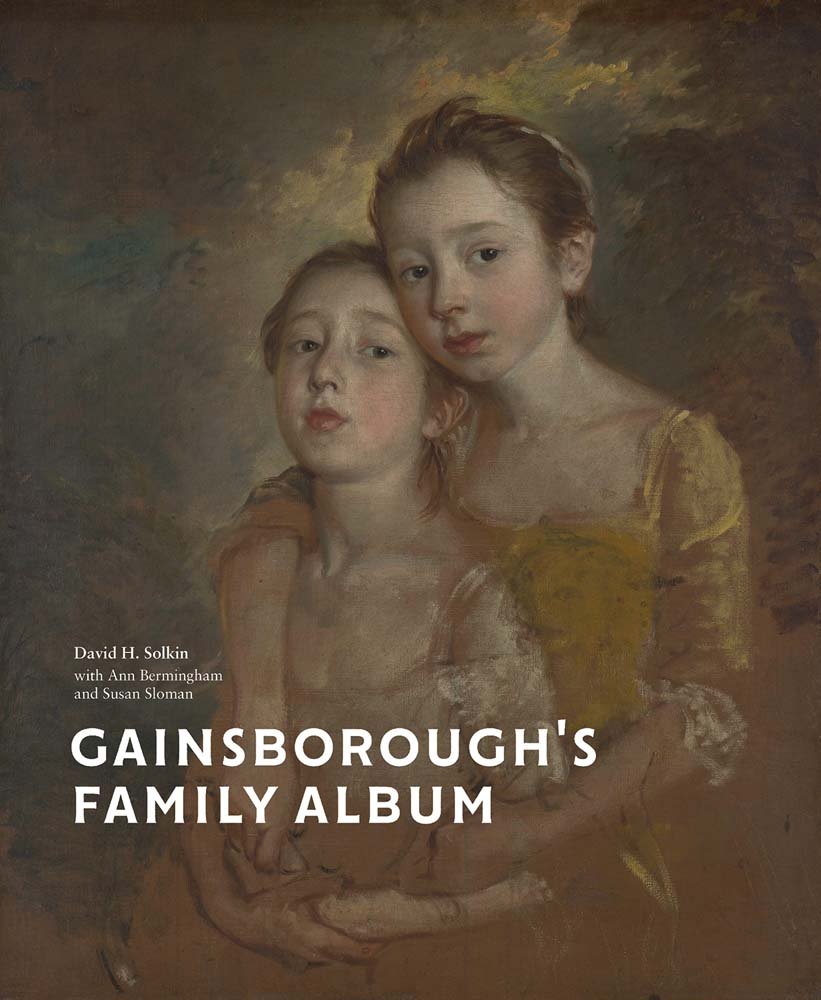
Publication

       Gainsborough’s Family Album is accompanied by a fully illustrated catalogue published by the National Portrait Gallery, London. It includes essays by exhibition curator David Solkin, emeritus professor of the Courtauld Institute of Art; Ann Bermingham, professor emerita of art history, University of California, Santa Barbara; and Susan Sloman, independent art historian and author. The catalogue also includes a chronology of Gainsborough’s life and an extensive family tree.

"I am sick of Portraits and wish very much to take up my Viol da Gamba and walk off to some sweet village when I can paint Landskips and enjoy the fag end of life in quietness and ease." Despite this famous protestation in a letter to his friend William Jackson, Thomas Gainsborough (1727–88) was clearly prepared to make an exception when it came to making portraits of his own family and himself. This book features over 50 portraits of himself, his wife, his daughters, other close relatives and his beloved dogs, Tristram and Fox.

Spanning more than four decades, Gainsborough's family portraits chart the period from the mid-1740s, when he plied his trade in his native Suffolk, to his most successful latter years at his luxuriously appointed studio in London's West End. Alongside this story of a provincial 18th-century artist's rise to fame and fortune runs a more private narrative, about the role of portraiture in the promotion of family values, at a time when these were assuming a recognizably modern form.
 
In the first of three introductory essays, David H. Solkin writes on Gainsborough himself, placing his family portraits in the context of earlier practice. Ann Bermingham explores Gainsborough's portraits of his daughters, with particular reference to two finished double portraits painted seven years apart and the tragic story arising from them. Susan Sloman discusses Margaret's role as her husband's business manager, its effect on the family dynamic and hence the visual representation of its members

Balthus

Fondation Beyeler in Riehen / Basel
2 September 2018 to 1 January 2019

Museo Nacional Thyssen-Bornemisza

From 19 February to 26 May 2019


In 2019 the museum will be presenting an exhibition on the legendary artist Balthasar Klossowski de Rola (1908-2001), known as Balthus. The exhibition is jointly organised with the Fondation Beyeler in Riehen / Basel, where it will be seen from September 2018 to January 2019.
Considered one of the great masters of 20th-century art, Balthus is undoubtedly one of the most unique painters of his time. His diverse, ambiguous work, which has been equally admired and reviled, pursued a direction that ran completely counter to the rise of the avant-gardes. Balthus himself named some of his influences derived from the tradition of art history, ranging from Piero della Francesca to Caravaggio, Poussin, Géricault and Courbet. A more detailed study of his work also reveals references to more recent movements such as Neue Sachlichkeit and his employment of devices derived from 19th-century children’s book illustrations.

In his divergence from modernity, which could now be described as “post-modern”, Balthus evolved a personal and unique type of avant-garde art and a figurative style that defies classification. His particular pictorial language, with its use of solid forms and strongly defined outlines, combines the procedures of the Old Masters with certain aspects of Surrealism. The resulting images involve numerous contradictions, juxtaposing tranquillity with extreme tension; reverie and mystery with reality; and eroticism with innocence.


Image result
 .

The starting point for the exhibition at the Fondation Beyeler is Balthusʼs monumental painting Passage du Commerce-Saint-André, from 1952–1954, which has been on permanent loan to the museum for some time. This enigmatic work epitomizes the artist's intensive engagement with the dimensions of space and time in the image, and with their relationship to the figure and the object. With this focus, the exhibition will bring together some fifty important pictures from every phase of Balthus's oeuvre, looking also at the strategies employed in the staging of his often provocative images, and illuminating the elements of irony and mystery in his work. His pictures combine tranquility with extreme tension, and embody a wealth of contradictions, mingling dream and reality, eroticism and innocence, the factual and the unfathomable, the familiar and the uncanny, in a wholly unique way.

 The exhibition, curated by Raphaël Bouvier with the support of MIchiko Kono and Juan Ángel López-Manzanares, brings together paintings from every period of Balthus’s career from the 1920s onwards. It will cast light on aspects such as the different types of intellectual interaction between the dimensions of space and time that exist in his paintings; the relationship between figure and object; and the essence of his enigmatic oeuvre.

The Museo Nacional Thyssen - Bornemisza presents a retrospective exhibition on the work of the French artist Balthasar Klossowski de Rola (1908 ‒ 2001), known as Balthus  It is organised in conjunction with Fondation Beyeler in Riehen/ Basel, where it is on show until January 2019, with the generous support of the painter’s family. 

Hailed as one of the great masters of twentieth - century art, Balthus is undoubtedly also one of the most unusual painters of his time. His diverse, ambiguous paintings , as admired as much as they are rejected, developed in virtually the opposite direction to the avant - garde movements. The artist himself explicitly stated that some of his influences in art historical tradition were Piero della Francesca, Caravaggio, Poussin, Géricault and Courbet. A closer analysis also reveals references to more modern movements such as New Objectivity and the devices used in the illustration of popular nineteenth - century children’s books such as Alice in Wonderland

His indifference – which could be described as ‘post - modern’ – of modern trends, Balthus developed a unique, personal figurative style that defies classification. His particular pictorial language characterised by bold forms and very marked contours combines the procedures of the O ld M asters with certain aspects of Surrealism , and his images embody many contradictions, mixing calm with extreme tension, the dream world and mystery with reality, and eroticism with innocence. In his urban scenes and interiors but also in his landscapes and still lifes, the picture space becomes a stage set in whi ch the viewer is invited to take part , while time appears to grind to a stand still. 

The exhibition, the first retrospective to be held in Spain for more than twenty years, brings together 47 works, mostly paintings in large format, which cover all the stages in his career from the 1920s onwards . 

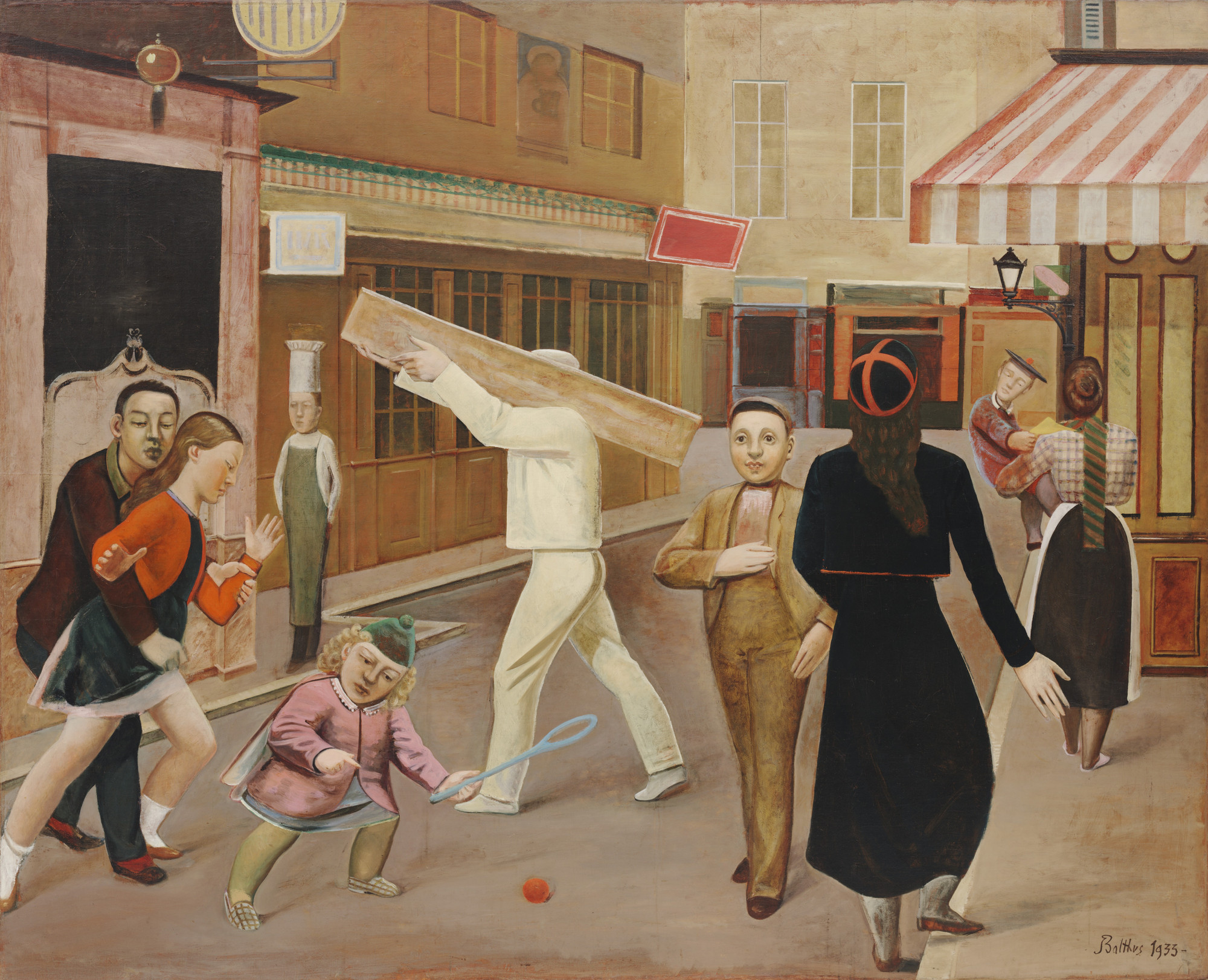
The selection includes a few of his most important works, such as  


The Street (1933), which will be on show in Spain for the first time ,  


 Balthus . Cathy Dressing , 1933 . Centre Pompidou, Paris. Musée national d'art moderne/Cent re de création industrielle Acquired in 1977 / 

Cathy ’s Toilette (1933), 


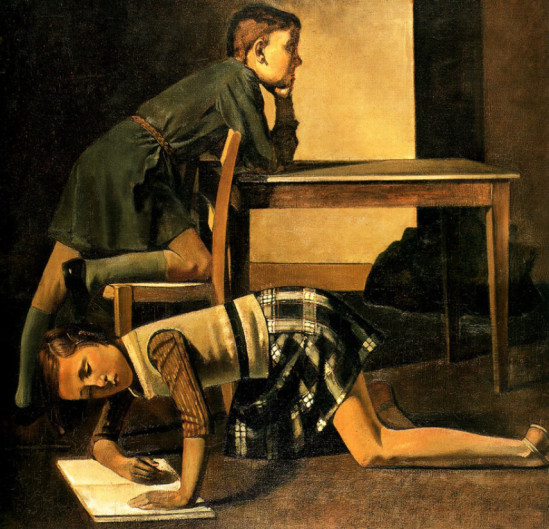
 The Blanchard Children (1937),  


Balthus. The Golden Days , 1944 ‒ 46 Hirshhorn Museum and Sculpture Garden, Smithsonian Institution, Washington, DC gift of the Joseph H.Hirshhorn Foundation, 1966

The Golden Days (1944 ‒ 46),  


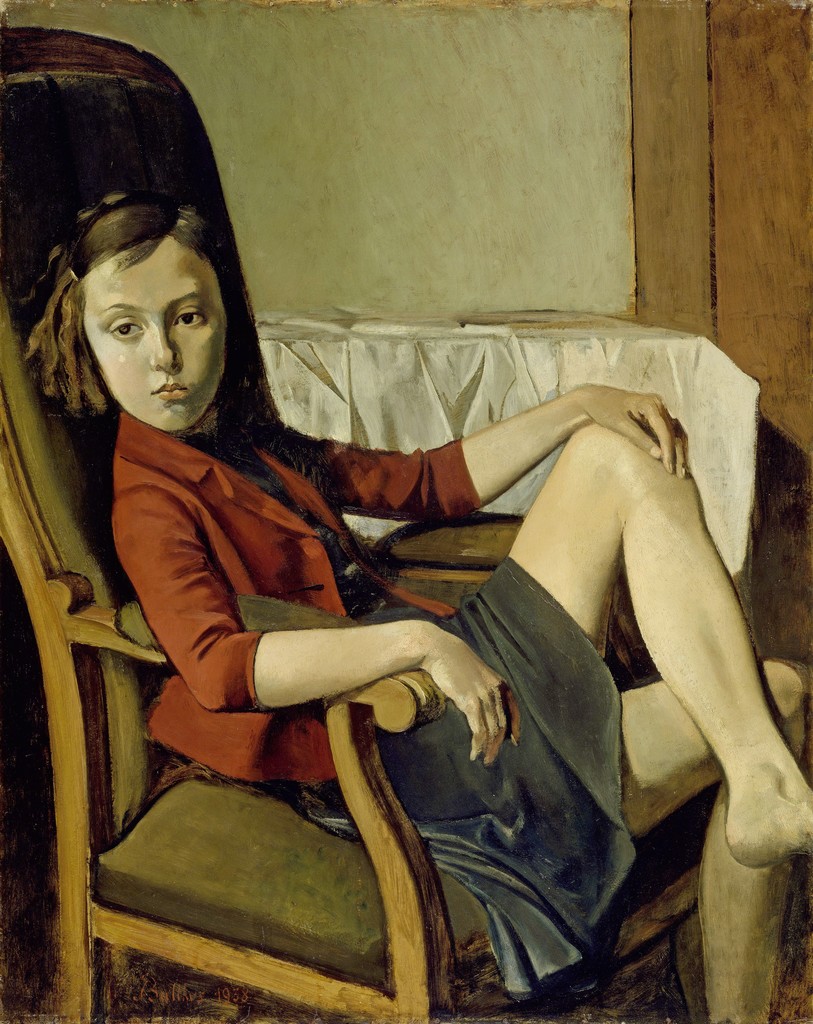
Balthus, Thérèse, 1938 Oil on cardboard on wood, 100.3 x 81.3 cm


Thérèse 


Balthus. Thérèse Dreaming , 1938
The Metropolitan Museum of Art, New York. Jacques and Natasha Gelman Collection, 1998 

 and Thérèse dreaming, 

both dated 1938 and magnificent examples of his controversial portraits of young adolescents, 

 Image result

The Card Game, 1948-50
Museo Nacional Thyssen-Bornemisza, Madrid
and the Museo Thyssen’s Card Game (1948 ‒ 50 ), the only masterpiece by Balthus in Spain. 

The last room shows the results of the technical study and recent restoration work carried out on this painting by the museum’s team of restorers. Mention should be made of the MoMA and Metropolitan Museum of New York, the Centre Pompidou in Paris, and the Hirshhorn Museum and Sculpture Garden in Washington, among other institutions and private collections, for the importance and number of works loaned for the show. 

Balthus (Par is, 1908 - Rossinière, 2001) 

The son of the art historian and painter Erich Klossowski and Elisabeth Dorothea Spiro, known as Baladine and also an artist, Balthus ( Balthasar) was born in Paris in 1908 and was raised in the intellectual and artistic environment of the city, where his parents had established themselves a few years earlier. 

Owing to the family’s German origins , they had to seek refuge in Berlin and Switzerland during the First World War . After the war, his parents separated and Baladine became Merline, the muse and lov er of Rainer Maria Rilke. Balthus and his elder brother Pierre went to live in Geneva with her. The poet ended up taking his father’s place and became his main mentor. In 1920 Rilke published a collection of watercolours by the young artist in the book Mitsou: quarante images par Balthusz; and from then onwards Balthus’s family nickname became his artistic name. 

Balthus returned to Paris in 1924 to devote himself to painting. Although he rejected other painters’ artistic teachings, he was guided by Pierre Bonnard, a family friend, at the outset of his career and he therefore started out in a postimpressionist style. However, what truly interested him was studying the Old Masters such as Poussin, whom he copied in the Louvre. I n 1926 he spent several months in Tuscany, where he steeped himself in the art of Piero della Francesca and Masaccio . The following year he received his first public commission: some frescoes for the church of Baetenberg. 

In the 1930 s he spent stints in Berne and Paris, where he made friends with André Derain and Alberto Giacometti, among other artists. His first one - man show in 1934 received favourable critiques but he did not sell any pictures. To earn a living he painted commissioned portraits and designed theatre sets and gradually made a reputation for  


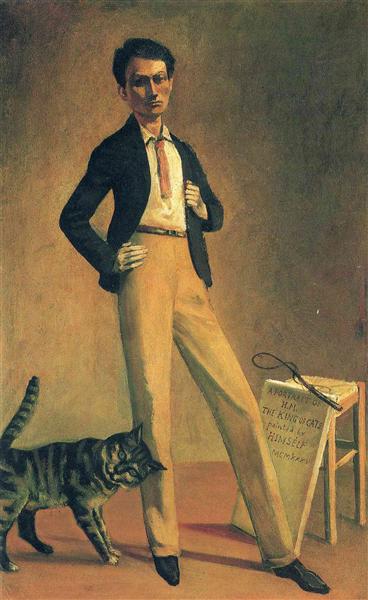
Balthus. The King of Cats , 1935 Musée cantonal des Beaux - Arts de Lausanne. Gift of Fondation Balthus Klossowski de Rola, 2016

 himself among the Parisian elite. In 1937 he married Antoinette de Watterville in Berne , with whom he had been in love years earlier and who had previously turned him down. He showed his work in London for the first time in 1936 and in the United States in 1938 . He was called up w hen the war bro ke out , but was discharged the following year due to health issues. By the end of the 1940s he was firmly established as a prestigious artist. 

After separating from Antoinette, from 1953 to 1961 he lived in the Château de Chassy , in Morvan (Burgundy ) , where he embarked on a period devoted chiefly to female bathers and landscape. In 1961 his friend the French culture minister André Malraux appointed him as director of the la Académie de France in Rome. Engaged for 15 years in renovating the historic Villa Médicis building, which housed the Academy, he spent less time on his work. In Italy, however, Balthus began using a technique that recalls that of Renaissance frescoes. 

In 1962, during a trip to Japan as director of the academy, he met Setsuko Ideta and went on to marry her a few years later. During a trip to Switzerland, Balthus and Setsuko fell in love with an eighteenth - century building known as the Grand Chalet in Rossinière, which had been a hotel since the days of the Grand Tour, housing well - known travellers and artists. After acquiring and renovating it, the painter went to live there in 1977 with his wife and children until the end of his days. He died on 18 February 2001. 

Painting against the current ‘I have no wish to figure among samples of the latest novelties. I simply want to fulfill my own destiny as a painter (...) ’ ‘Every great painter teaches us to see. Balthus took us into a realm all his own. He was not a Surrealist, nor a realist, nor did he ever belong to any other ism. His paintings were sheer originals, unique and independent inventions, owing a bit to the past, but only as masterly craftsmanship, a bit to some scandalous subjects, but only as a way to get attention (as he once wrote in a letter), and in the end owing everything to their courageous appearance in our present .’ (Wim Wenders) Balthus’s first solo exhibition in 1934 featured only seven canvases , but they proved to be quite a revelation. His images, painted in the traditional manner but far removed from the figurative trends of the day, were steeped in psychological connotations and myste y .  

Balthus . The Turkish Room , 1965 - 196. Centre Pompidou, Paris. Musée national d'art moderne/Centre de création industrielle, Paris. Adquisición del estado, 1967 

Balthus. The Street , 1933. The Museum of Modern Art, New York. James Thrall Soby Bequest , 1979

 Balthus set out to provoke. At first sight his paintings look conventional, with an almost academic classicism, but they are not: underlying them is a much more complex psychological vision. The world is presented as a stage where dreams are interwoven with everyday life. They are disturbing, ambiguous images that cause fascination or rep ulsion, but never indifference. His narrative pictures are theatricalised psychological dramas, intimate scenes or domestic tragedies that are played out for the spectator over and over again . 

The sca nt depth of the picture space, the limited, dramatic palette, the exaggerated ly classical feeling, the suggestive and striking figures, the irveiled or latent eroticism, the implicit violence and the sensation of time stood still all help create this mysterious atmosphere. The time of childhood , the enigma of reality The dream of a mythical and unattainable innocence underlies many of his paintings, as does an ambiguous vision of the transition from childhood to adulthood, especially with respect to sexuality and growing awareness of one’s own body. 

Balthus considered ‘the pursuit of childhood, its charm and secrets’ to be an essential part of his work and the motif of children playing and popular tales such as Heinrich Hoffmann ’s Shaggy Peter and Lewis Carroll’s Alice in Wonderland as the embodiment of a magical age became a chief source of inspiration and leitmotiv of his painting. The sleepy, self - engrossed, bored - looking figures awaiting idly, reclining in armchairs and on sofas, sometimes holding a mirror or a book, also recall Carroll’s tale where the story begins with Alice’s boredom. 

As in Balthus’s paintings, this is the situation that gives rise to revelation and creation. The artist wrote in his memoirs: 

‘ ( ... ) fixing them in the act of reading or dreaming prolongs a privileged, splendid and magic glimpsed - at time. Thus a book is a key to open a mysterious trunk containing childhood scents . (...) It is a gold - sprinkled time that avoids worldly alteration, time nimbused by a magic halo, time fixed in terms of what the smiling, dreaming girls see. It is surreal time in the true sense of the term. ’ 

Balthus was known for working slowly and spending a long time on each of his paintings, and began several at once. For him painting was an art of patience, a lengthy relationship with , and commitment to , the canvas . Patience can be seen to be a fundamental aspect of Balthus’s artistic conception and he worked in the manner of the Old Masters, which involved taking his time and for him represented an ideal in contrast to the modern concept of time characterised by speed and haste : ‘This is slow art, in which the work continues nonetheless.’  


Balthus. The Three Sisters , 1955. Patricia Phelps de Cisneros Collection 


http://www2.museothyssen.org/microsites/prensa/2019/balthus/img/El%20gato%20en%20el%20espejo_GRND.jpg 

Saturday, February 9, 2019

British Painting from Turner to Whistler

The Fondation de l’Hermitage 
 1 February to 2 June 2019

The Fondation de l’Hermitage continues its exploration of the great centres of western art in the 19th century with an exhibition devoted to British painting from Turner to Whistler, taking in the Pre-Raphaelites. Nearly 60 paintings, on loan from the most prestigious collections in the United Kingdom and shown in Switzerland for the first time, offer an unrivaled survey of art produced during the golden age of the British Empire, highlighting its captivating originality.


Frederick Sandys, Vivien, 1863. Huile sur toile, 64 x 52,5 cm. Manchester Art Gallery © Manchester Art Gallery / Bridgeman Images.
 

Alongside Turner, whose dazzling oeuvre anticipated Impressionism, the exhibition pays tribute to artists who won renown through landscape painting, such as Atkinson Grimshaw, Baker Pyne, Brett, and Martin. 
Art that reflects changing times
Hermitage foundation Emslie
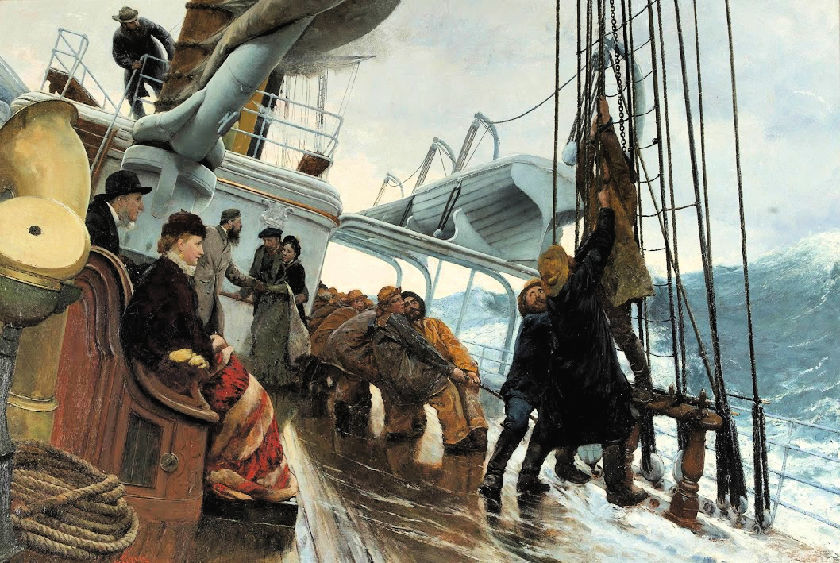
Alfred Edward Emslie, Bending Sail after a Gale, 1881, oil on canvas, 68x102cm, Private Collection, ©photo TDR.


The exhibition places a special emphasis on the Pre-Raphaelite Brotherhood (Millais, Rossetti) as well as the Aesthetic Movement (Burne-Jones, Watts), two circles of artists who found powerful inspiration in literature, mythology and antiquity (Alma-Tadema, Egley, Hughes, Sandys, Scott).


George William Joy, The Bayswater Omnibus, 1895, oil on canvas, 120,6×172,5 cm, Museum of London, ©George William Joy / Museum of London.

The industrial revolution and the rapid development of cities and public transport give rise to compelling scenes that bear witness to different facets of modern life (Emslie, Fletcher, Hicks, Joy) along with its social repercussions (Collinson, Holl, Mulready, Nelson O’Neil, Walker).

Hermitage Lausanne British Collinson
James Collinson, At the Bazaar, 1857, oil on panel, 60,6×45,7cm, Sheffield Museum, Graves Gift 1929, ©Sheffield Museum.

British Painting from Turner to Whistler is the first exhibition devoted to British Victorian paintings in a Swiss museum and is intended to reveal the many artistic directions that dominated the visual arts in Britain after the death of Constable. Included in the exhibition are three works on loan from the Royal Collection which showcase the richness and diversity of paintings made during this period. 
 
 
Frank Holl, No Tidings from The Sea provides an example of a direct commission by Queen Victoria with the subject left to the painter's discretion.


  • A corporal in the Scots Fusilier Guards has arrived home in the early hours of the morning after completing a tour of service fighting in the Crimean War (March 1854 - Feburary 1856). His wife and mother put down their sewing and reading to embrace him as
     
    Sir Joseph Noel Paton, Home (The Return from the Crimea) The Royal Collection © Her Majesty Queen Elizabeth II


    Hermitage exhibit Millais

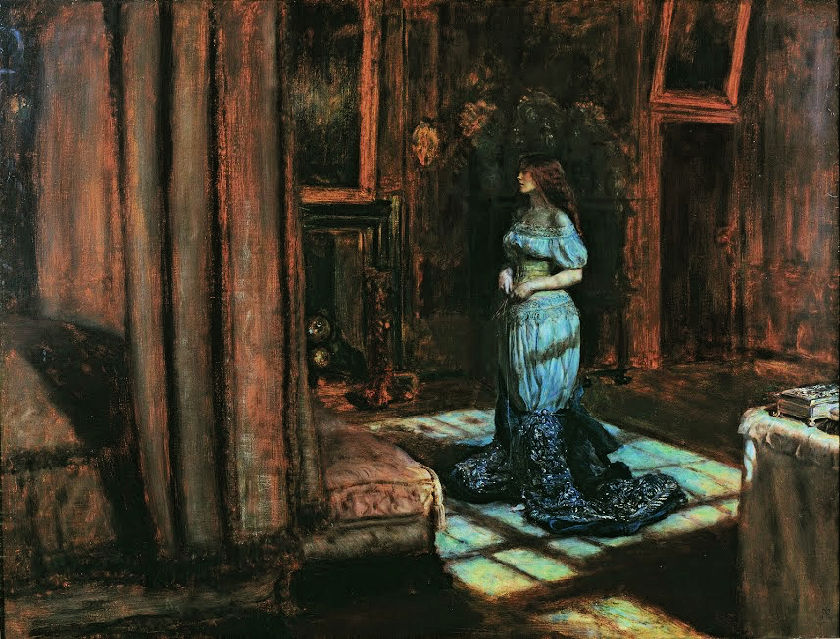
    John Everett Millais, The Eve of Saint Agnes, 1863, oil on canvas, 117,8 x 154,3cm, Her Majesty Queen Elizabeth II, ©Royal Collection Trust/Her Majesty Queen Elizabeth II 2019

    The survey concludes with a section dedicated to Sargent and Whistler, cosmopolitan artists of American origin: bold and brilliant portrait painters, among the most celebrated of their era.